19.4 - Biomass Transfer & Pyramids
Biomass and energy transfer
- Biomass is the mass of living material in an organism. At each level of a food chain it carries the energy originally captured from sunlight.
- Producers (plants and algae) sit at the base of every chain - they capture light energy and store it as biomass through photosynthesis.
- Only about 1% of the light reaching producers is transferred into new biomass this way.
- Biomass, and the energy it holds, then passes up the chain as one organism eats another.
The transfer is very inefficient
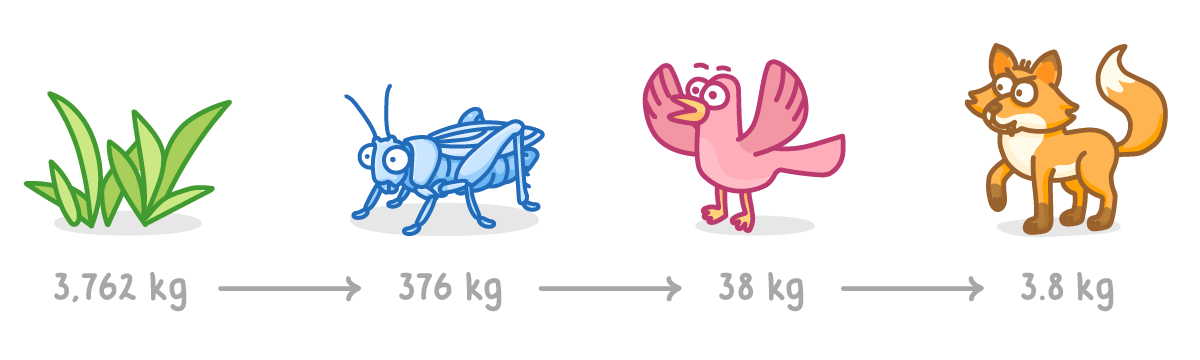
- Only about 10% of the biomass at any trophic level is passed on to the level above.
- The other 90% is lost on the way.
Three reasons so much is lost at each step
- Not all of the food is eaten - Bones, teeth, claws, roots, and tough plant fibres are usually left uneaten, so their biomass never enters the next level.
- Not all that is eaten is absorbed - Indigestible parts pass straight through the gut and are egested as faeces.
- Most absorbed material is used in respiration - This releases energy for movement, warmth, and other life processes rather than being built into new body tissue.
- Respiration returns this material to the surroundings as waste products such as carbon dioxide and water.
- The breakdown of proteins adds urea, lost in urine.
Consequences for the food chain
- Because so much is used up keeping each organism alive rather than stored, each trophic level holds less biomass and less energy than the one below it.
- There are usually fewer organisms higher up the chain.
- This is why food chains rarely have more than four or five trophic levels - after a few steps there is too little biomass and energy left to support another level.
TermDefinition
BiomassThe material that living organisms are made of, or the mass of this material in an organism or at a trophic level (a feeding level in a food chain).
ProducerAn organism, usually a green plant or alga, that makes its own food by photosynthesis and begins a food chain.