3.1 - Photosynthesis
The photosynthesis reaction
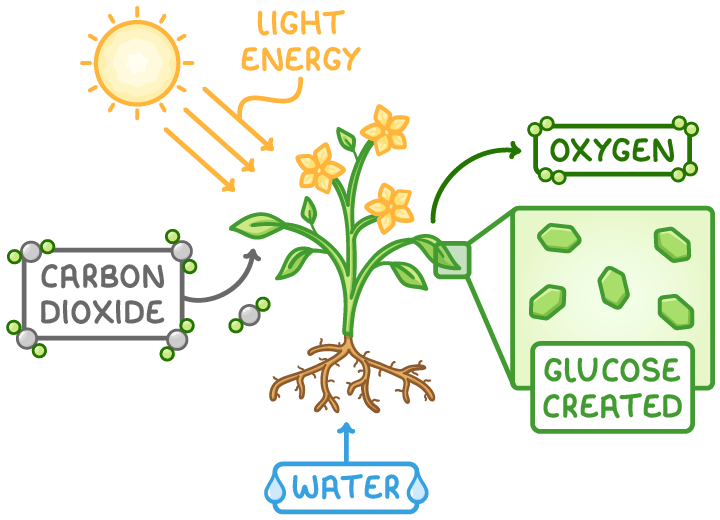
- Photosynthesis is the process by which green plants make their own food.
- Carbon dioxide and water are converted into glucose (also called sugar), and oxygen is produced as well.
- The reaction needs energy, which comes from light, so photosynthesis is described as an endothermic reaction - energy is transferred from the environment into the plant during the reaction.
Where photosynthesis happens
- The reaction happens inside chloroplasts - the small structures found in the cells of leaves and other green parts of a plant.
- Chloroplasts contain a green pigment called chlorophyll, which absorbs light and transfers its energy into the chemical energy stored in the glucose that is made.
The word equation for photosynthesis

Light, absorbed by chlorophyll, provides the energy for the reaction, and is usually written above the arrow with chlorophyll below it.
TermDefinition
PhotosynthesisThe process in which green plants and algae use light energy to make glucose from carbon dioxide and water.
ChloroplastA sub-cellular structure in plant and algal cells where photosynthesis takes place.
ChlorophyllThe green pigment in chloroplasts that absorbs light energy for photosynthesis.