3.11 - Plant Diseases & Defences
Plant diseases and their signs
- Plants can be infected by pathogens, just like animals - by viruses, bacteria, and fungi.
- They can also be infested and damaged by larger organisms such as insects.
- Aphids, for example, can do a great deal of damage to a plant.
- A pest infestation like this is usually easy to spot, because the insects themselves can be seen on the plant.
- A viral example is tobacco mosaic virus (TMV), which gives a mottled, discoloured pattern on the leaves of many plants.
Signs that a plant is diseased
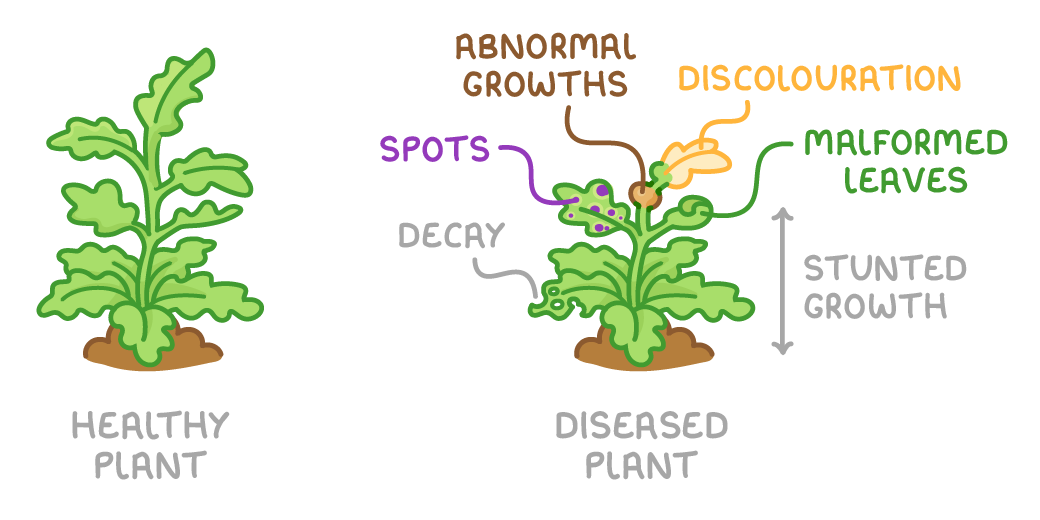
- It's usually fairly clear when a plant has a disease, because diseased plants show characteristic signs.
- Common signs include:
- Stunted growth
- Spots on the leaves
- Patches of decay or rot
- Abnormal growths, such as lumps
- Malformed stems or leaves
- Discolouration
- Different diseases produce different combinations of these signs - which is what makes it possible to tell one disease from another.
Detecting and identifying plant disease
- The first stage in detecting a plant disease is usually observation in the field.
- A plant pathologist (an expert in plant disease) recognises the signs of disease on the plant, for example:
- Growths on the stems
- Mottled, discoloured leaves
- To identify exactly which disease it is, the signs can be looked up in a gardening manual or on a gardening website, which match a set of signs to a particular disease.
Laboratory identification
- When field observation isn't enough, the infected plant (or a sample of it) can be taken to a laboratory, where the pathogen can be identified more accurately.
- One quick laboratory method uses a testing kit containing monoclonal antibodies - identical antibodies, made by a single clone of cells, that bind only to an antigen found on one particular pathogen.
- A colour change or other signal in the kit shows whether that pathogen is present.
Physical plant defences
- Plants don't have an immune system of specialised cells and antibodies like animals do.
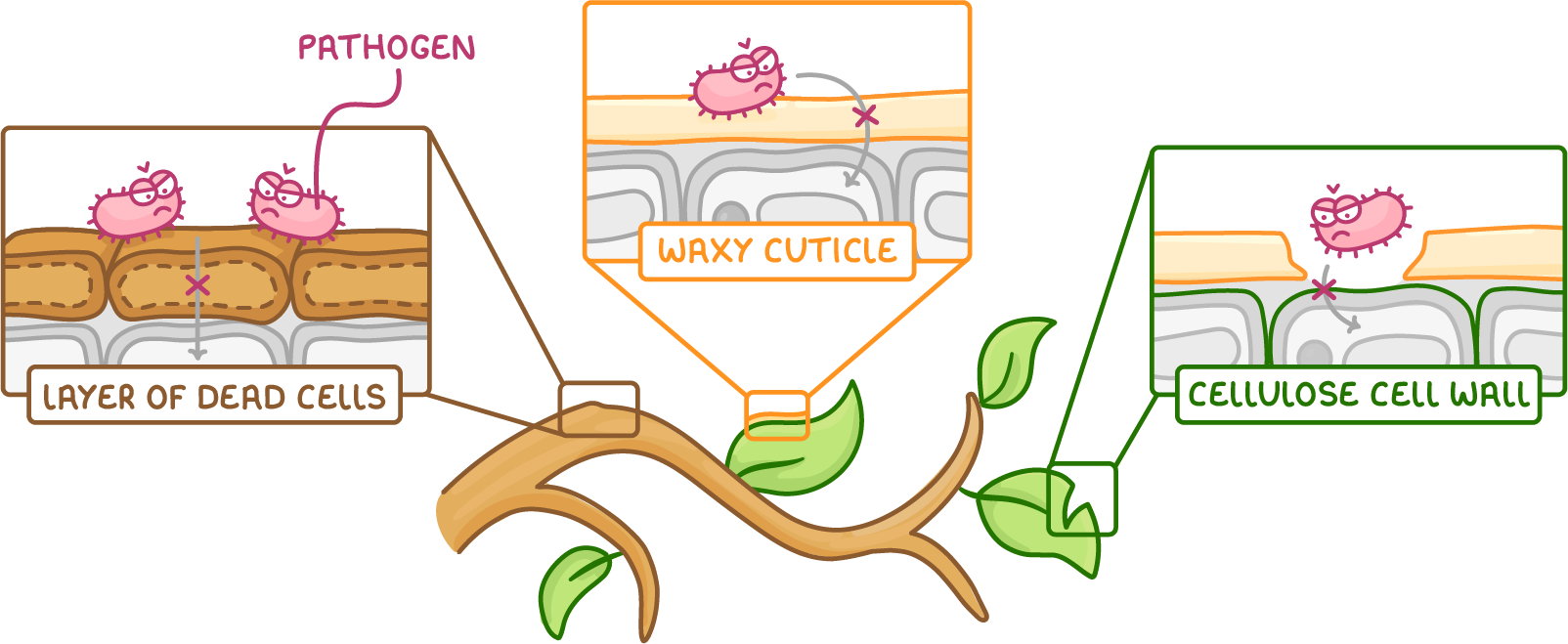
- Instead, they protect themselves partly with physical defences - barriers that stop pathogens getting into the plant in the first place.
The main physical barriers
- Waxy cuticle - A tough layer covering most leaves and stems. It blocks pathogens from entering and stops water collecting on the leaf, lowering the risk of infection by water-carried pathogens.
- Cellulose cell wall - Every plant cell (beneath the cuticle) is surrounded by a cell wall made of cellulose, forming a further barrier against any pathogen that gets past the cuticle.
- Layers of dead cells - Many plants have these around their stems, such as the outer bark of a tree, acting as an extra barrier.
Chemical plant defences
As well as physical barriers, many plants make chemical defences - substances that kill pathogens or deter the animals that would eat the plant.
Antimicrobial chemicals
- Also called antibacterials or antiseptics, these chemicals kill or stop the growth of bacteria and fungi.
- Examples: mint and witch hazel.
Poisons to deter herbivores
- Some plants make poisonous chemicals that deter herbivores (plant-eating animals).
- Examples: tobacco plants, foxgloves, and deadly nightshade.
- The poison digitalis comes from the foxglove.
Mechanical plant defences
Mechanical defences work physically against the animals that might eat or damage a plant, rather than against pathogens.
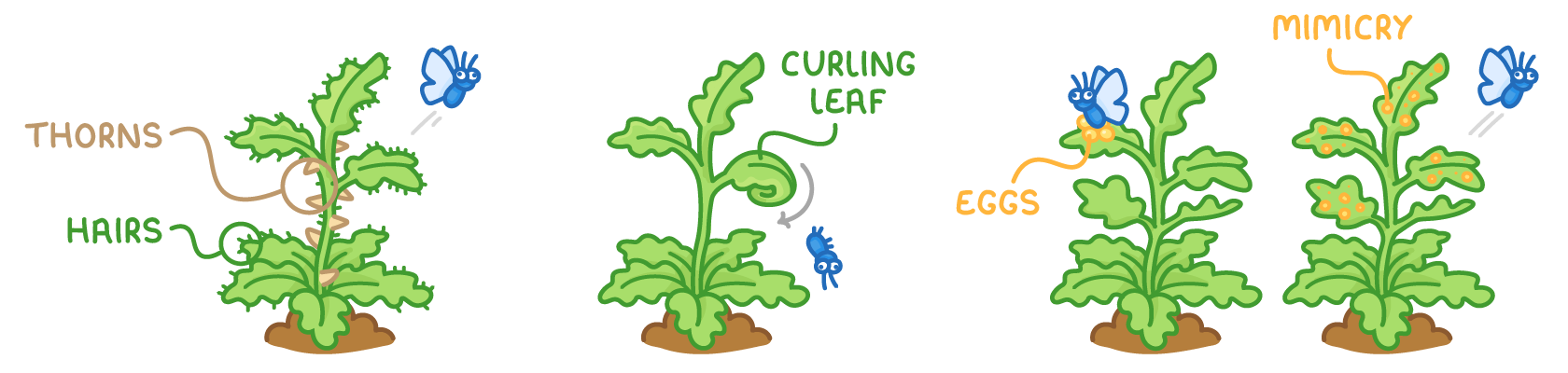
Three types of mechanical defence
- Thorns and hairs - Stop animals touching or eating the plant.
- Drooping or curling leaves - Some plants have leaves that droop or curl up when touched, which can knock feeding insects off.
- Mimicry - The plant looks like something else to put animals off. For example, the passion flower has bright spots on its leaves that resemble butterfly eggs, which discourages butterflies from laying their own eggs there because the leaf looks as though it's already taken.
TermDefinition
Plant pathologistAn expert in plant disease.
Monoclonal antibodyAn antibody produced by a single clone of cells, so that all copies are identical and bind to the same specific antigen.
Antimicrobial chemicalA substance produced by a plant that kills or stops the growth of bacteria and fungi.
HerbivoreAn animal that eats plants.