6.25 - Cloning Plants
Taking cuttings
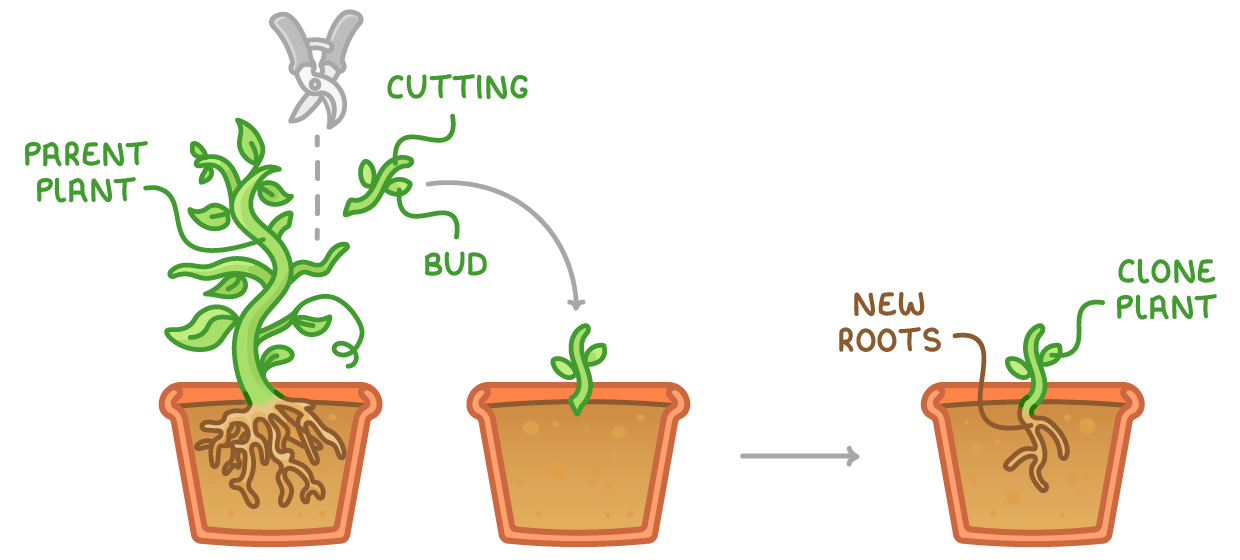
- A cutting is a small piece taken from a parent plant - typically a section of stem carrying a new bud - which is planted and grown into a whole new plant.
- The new plant grows from the cells of a single parent, with no fertilisation and no mixing of genetic material.
- This makes it genetically identical to the parent - it is a clone.
- Gardeners use cuttings to reproduce a plant whose characteristics they like (e.g. a good flower or fruit crop), getting many identical copies from one chosen parent.
Growing the cuttings
- Cuttings are usually kept in moist conditions until they have grown roots and are ready to be planted out.
- It is a quick and cheap way to produce clones.
- It is an older and simpler method than tissue culture, needing no specialist laboratory equipment or sterile conditions.
Tissue culture (micropropagation)
- Tissue culture (also called micropropagation) produces large numbers of genetically identical plants (clones) from a single parent plant.
- Every plantlet develops from the parent's own cells, so all the new plants are genetically identical to the parent and to each other, sharing the same beneficial features.
The stages of tissue culture
- Choose a parent plant with desirable characteristics - e.g. a good fruit crop, attractive flowers, or a useful trait such as pest resistance.
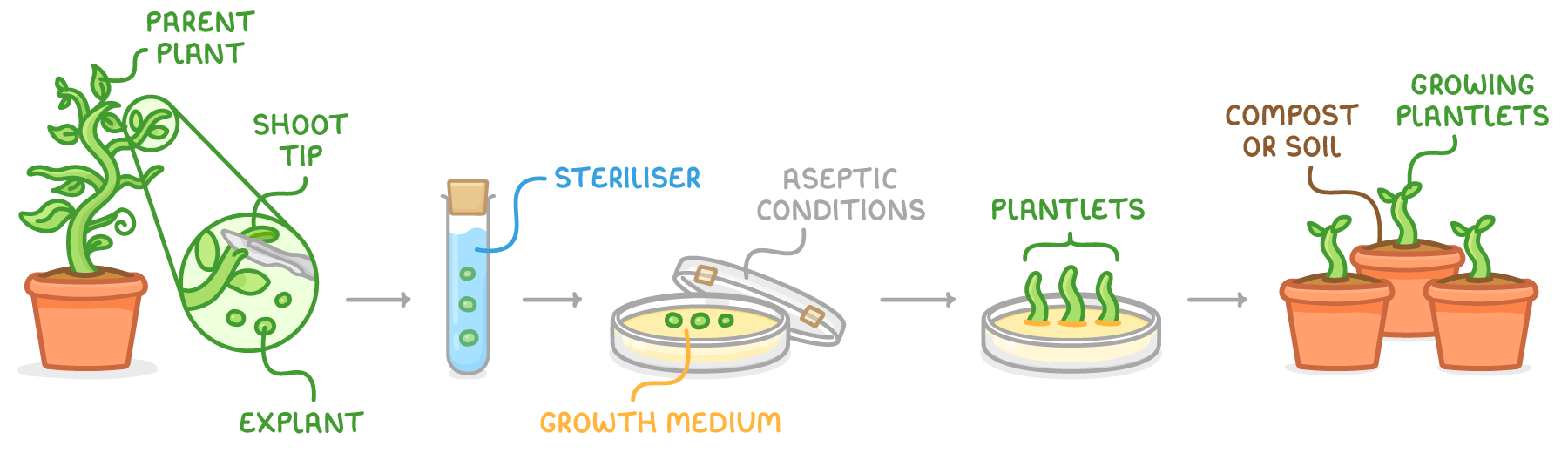
- Remove explants - Small pieces of tissue - from the parent. The best results come from fast-growing tissue at the tips of the roots and shoots.
- Sterilise the explants to kill any microorganisms.
- Grow them on a growth medium containing the nutrients the cells need plus plant growth hormones. This is done under aseptic (sterile) conditions so microbes cannot grow and harm the developing plants.
- The cells in each explant divide and grow into a small plant, or plantlet.
- Move the plantlets into compost or soil to carry on growing.
Why the method is useful
- Fast - Plants can be produced quickly.
- Needs very little space and can be carried out all year round.
- Preserves rare plants that are difficult to reproduce naturally.
- Commercial production - Nurseries can produce plants for sale.
- Scalable - When large quantities are needed, further explants can be taken from the new plantlets and grown on, producing thousands of identical plants.
TermDefinition
CloneAn organism that is genetically identical to another organism, such as its parent.
CuttingA small piece taken from a parent plant that is planted and grown into a whole new plant.
Tissue cultureA laboratory technique for growing plant or animal cells.
MicropropagationA laboratory technique that produces large numbers of genetically identical plants from a single parent plant.
ExplantA small piece of tissue taken from a parent plant to be grown in tissue culture.
Culture mediumA liquid or gel containing the nutrients that microorganisms or cells need to grow.