13.16 - Alcohol
The effects of alcohol
- Alcohol is a drug, and drinking too much of it harms the body in several ways.
- It's a depressant - it reduces the activity of the nervous system and slows down reactions, so reaction times are longer.
- It's also addictive - people can become dependent on it in daily life, find it very hard to stop, and suffer severe withdrawal symptoms such as anxiety, nausea, and shaking when they try.
Damage to the liver
- Most alcohol is broken down in the liver, where enzymes break it down.
- Some products of this breakdown are toxic, so the liver itself is damaged by dealing with alcohol.
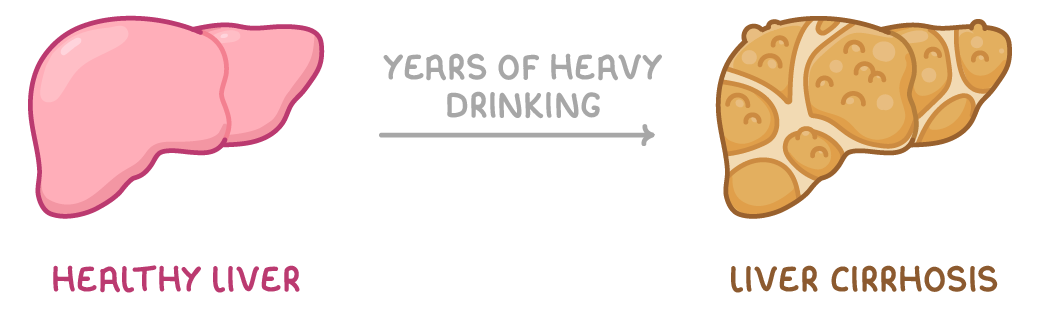
- Heavy drinking over a long period kills liver cells, and scar tissue forms in their place - this scarring is called cirrhosis.
- As more of the liver becomes scarred:
- Blood can no longer flow through it properly.
- It can no longer carry out its normal job of cleaning the blood, so dangerous substances build up and damage the rest of the body.
- Heavy drinking is also linked to raised blood pressure and to several types of cancer.
Effects on the body and behaviour
- Impaired judgement
- Poor balance and coordination
- Slurred speech
- Blurred vision
- Drowsiness
This is why drinking makes activities such as driving dangerous.
Harm during pregnancy
- Drinking heavily during pregnancy is especially harmful because the alcohol reaches the developing baby and interferes with its development.
- This can lead to foetal alcohol syndrome, in which the baby is born with lasting physical and developmental problems.
TermDefinition
DepressantA substance that reduces the activity of the nervous system and slows down reactions, so reaction times are longer.
CirrhosisA condition where liver cells are killed and replaced by scar tissue, preventing the liver from cleaning the blood properly.
Foetal alcohol syndromeA condition in a baby that causes lasting physical and developmental problems. It is linked to the mother drinking heavily during pregnancy.