13.14 - Smoking & Lung Disease
The harmful chemicals in tobacco smoke
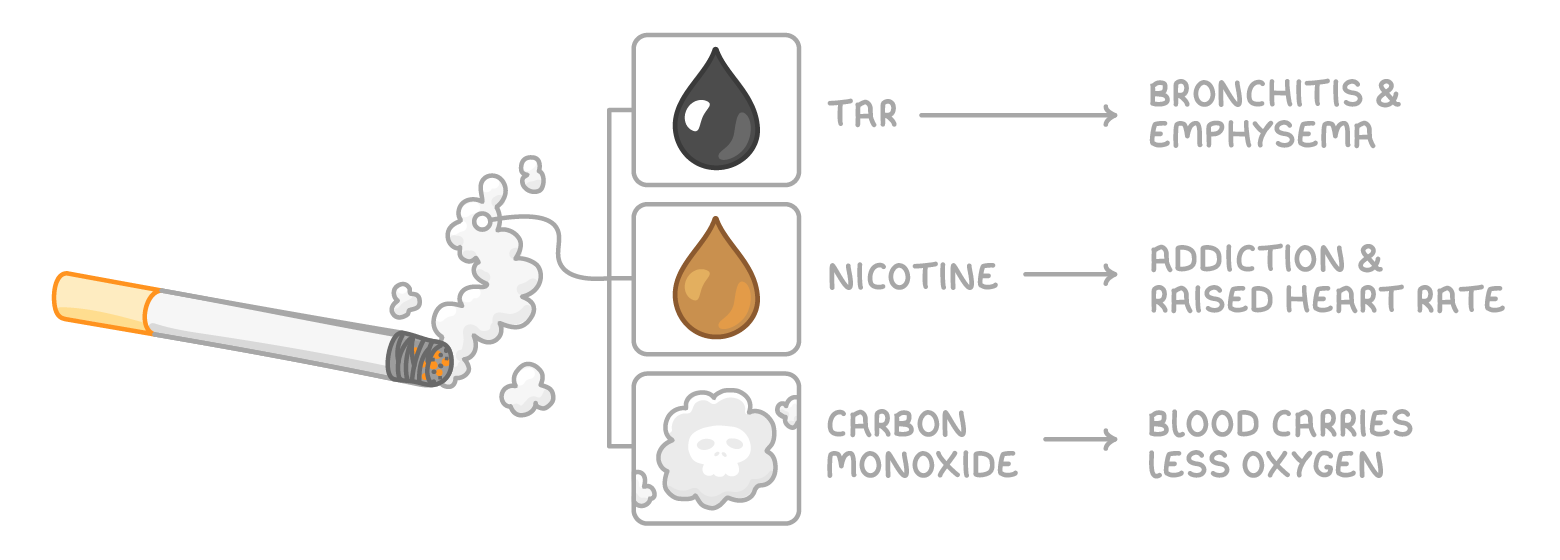
Tobacco smoke contains several harmful substances, and each does a different kind of damage.
Tar
Tar is the main cause of lung disease. It irritates and damages the airways, causing:
- Chronic bronchitis - The bronchi and bronchioles become narrowed and inflamed.
- Emphysema - The walls of the alveoli (the tiny air sacs where gas exchange happens) are damaged. As the alveoli break down, the surface area for gas exchange is reduced, so the lungs can't take in oxygen as well.
The chemicals in tobacco smoke also cause lung cancer, in which lung cells divide in an uncontrolled way to form a tumour.
Nicotine
- Nicotine is the substance that makes smoking addictive, so people find it hard to stop even when they know the harm it does.
- It also raises the heart rate.
Carbon monoxide
- Carbon monoxide combines with the red blood cells in place of oxygen, which reduces the amount of oxygen the blood can carry.
- The blood then delivers less oxygen to the body. This puts strain on the heart and circulation - one of the ways smoking damages the circulatory system as well as the lungs.
TermDefinition
TarA sticky mixture of chemicals in tobacco smoke that paralyses cilia and causes lung diseases, including lung cancer.
NicotineThe addictive substance in tobacco smoke.
Chronic bronchitisA disease caused by tar irritating the airways, leaving them narrowed and inflamed.
EmphysemaA disease in which the walls of the alveoli break down, reducing the surface area for gas exchange.