11.14 - Genetic Engineering
What genetic engineering and GM organisms are
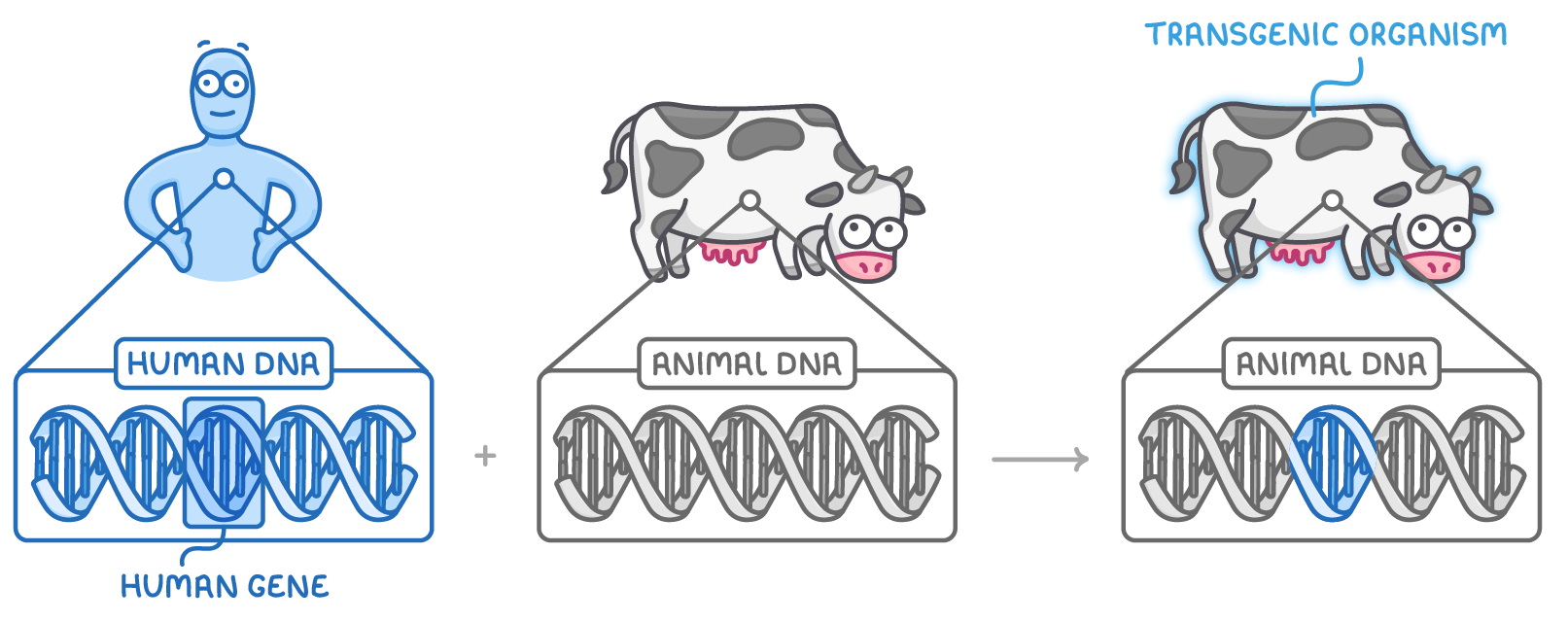
- Genetic engineering (also called genetic modification) is the transfer of a gene for a desirable characteristic from one organism's genome into another organism, so the second organism develops that characteristic.
- The genome is the complete set of genetic material in an organism.
- Genetic engineering changes the genome by removing, changing, or inserting individual genes - most often by adding a gene taken from a different organism.
GM and transgenic organisms
- An organism changed in this way is described as genetically modified (GM).
- Because the gene often comes from a different species, it's also called a transgenic organism - one that contains genes brought in from another type of organism.
- You can have transgenic bacteria, animals, and plants.
- Sometimes the gene is transferred while the organism is at an early stage of development (such as an egg or embryo), so the whole organism grows with the new characteristic in all its cells.
How genetic engineering is used
- Bacteria - Modified to make human insulin to treat diabetes
- Crops - Modified to resist insects, herbicides, or disease, or to improve the size and quality of their fruit
- Sheep - Modified to make useful substances such as drugs in their milk
The genetic-engineering process
- Genetic engineering moves a gene from one organism into another using a precise sequence of enzyme steps.
- The steps below use the modification of bacteria as the worked example.
Key terms
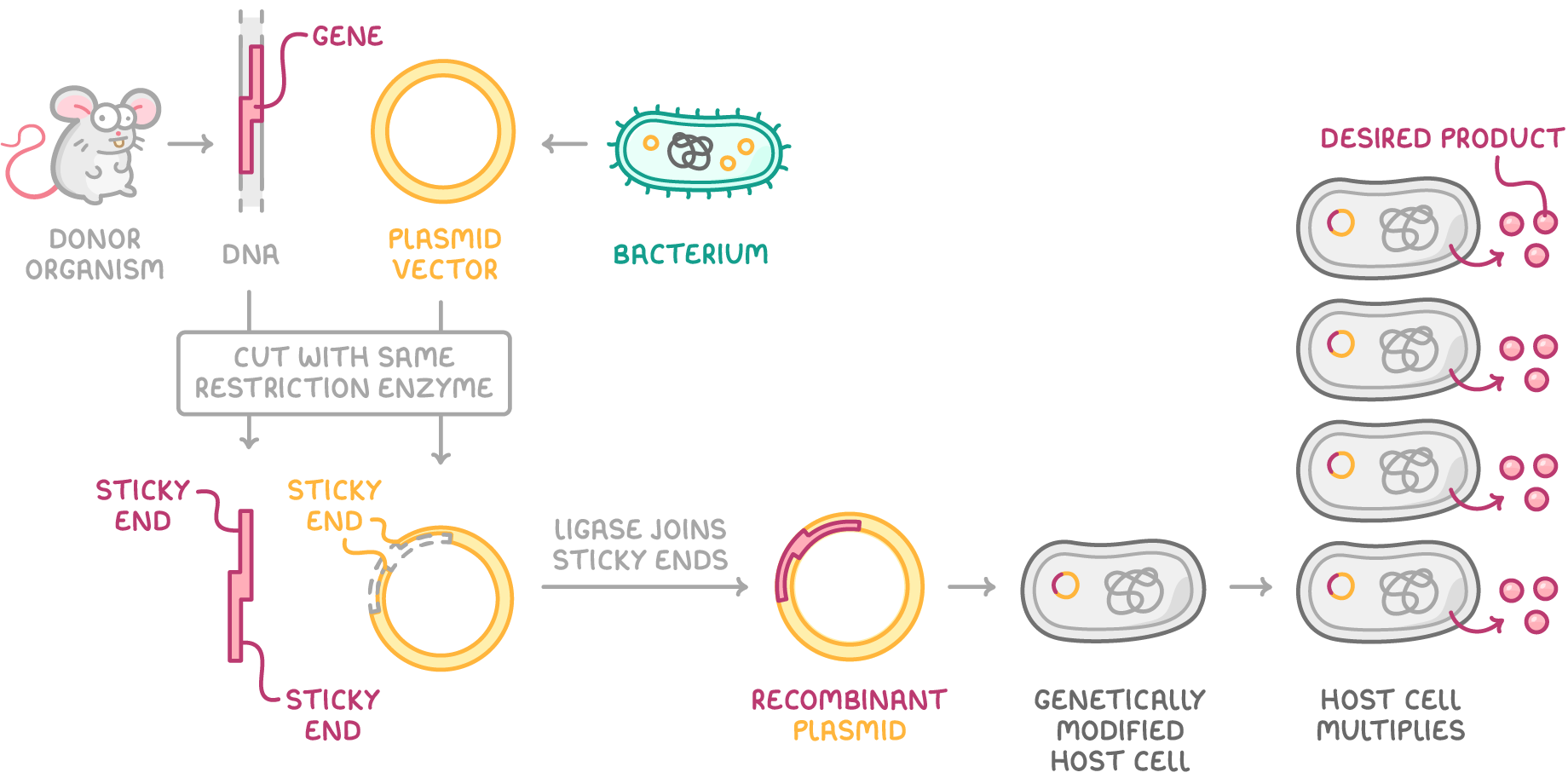
- Restriction enzyme - Recognises specific sequences of bases and cuts the DNA at those points, leaving short tails of unpaired bases called sticky ends.
- Plasmid - A small loop of DNA found in a bacterium.
- Ligase - An enzyme that joins matching sticky ends together.
- Recombinant plasmid - A plasmid made of two different pieces of DNA joined together.
- Vector - Something used to carry the gene into a host cell (a plasmid, or a virus).
The steps
- The required gene is cut out of the donor DNA using a restriction enzyme, leaving sticky ends (short tails of unpaired bases).
- A plasmid is removed from a bacterium and cut open with the same restriction enzyme, so it is left with complementary (matching) sticky ends.
- The gene and the cut plasmid are mixed with ligase, which joins the matching sticky ends together to form a recombinant plasmid.
- The recombinant plasmid acts as a vector and is inserted into a host cell, such as a bacterium. A virus can be used as the vector instead.
- The modified host multiplies into millions of cells, all carrying the inserted gene and expressing it to make its product.
GM bacteria make human insulin
- Insulin is the hormone that controls blood glucose.
- People with type 1 diabetes can't make enough of their own, so they need a regular supply.
- Genetic engineering is used to make human insulin from bacteria.
How the insulin is made
- The human insulin gene is transferred into bacteria.
- The genetically modified bacteria are grown in large numbers in a fermenter, making human insulin as they multiply.
- The insulin is extracted from the culture, purified, and packaged - giving pure human insulin ready to use. This stage is known as downstreaming.

Advantages over the older method
The older method extracted insulin from the pancreases of slaughtered pigs and cattle. Producing it from GM bacteria has several advantages:
- Supply isn't limited by the number of animals available, so large, reliable amounts can be made.
- The bacterial insulin is structurally identical to human insulin, so it works more effectively and is less likely to cause an allergic reaction.
- There's no risk of transferring viruses or other infections from animals.
- It avoids the ethical objection some people have to using animal products.
TermDefinition
Genetic engineeringThe process of changing an organism's genome, usually by inserting a gene from another organism, to give it a desired characteristic.
Transgenic organismAn organism that contains genes transferred from a different species.
Restriction enzymeAn enzyme that recognises specific sequences of bases and cuts the DNA at those points.
Sticky endsShort tails of unpaired bases left at the ends of DNA cut by a restriction enzyme.
PlasmidA small ring of DNA, separate from the main chromosome, found in bacteria and often carrying extra genes.
LigaseAn enzyme that joins matching sticky ends of DNA together.
Recombinant plasmidA plasmid made of two different pieces of DNA joined together.
Vector (genetic engineering)A carrier, such as a plasmid or a virus, used to transfer a gene into a host cell.