21.3 - Genetic Engineering
What genetic engineering and GM organisms are
- Genetic engineering (also called genetic modification) is the transfer of a gene for a desirable characteristic from one organism's genome into another organism, so the second organism develops that characteristic.
- The genome is the complete set of genetic material in an organism.
- Genetic engineering changes the genome by removing, changing, or inserting individual genes - most often by adding a gene taken from a different organism.
GM and transgenic organisms
- An organism changed in this way is described as genetically modified (GM).
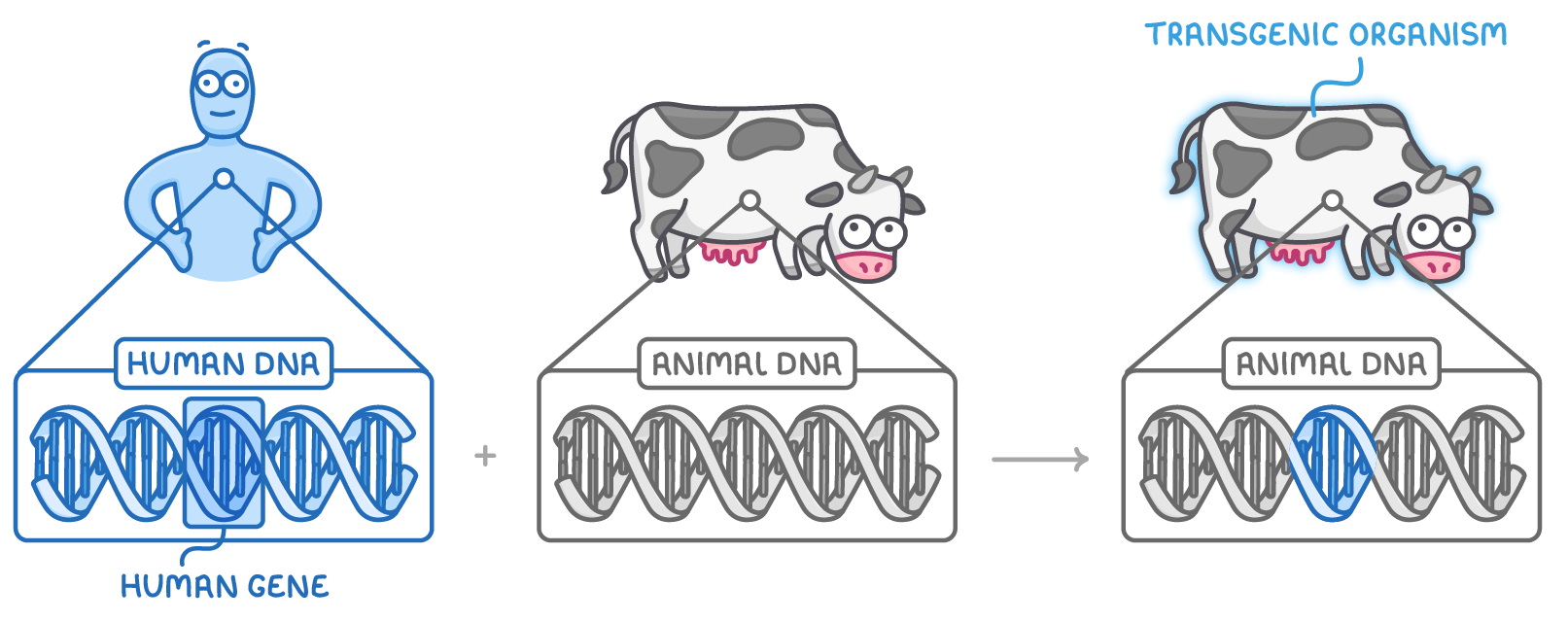
- Because the gene often comes from a different species, it's also called a transgenic organism - one that contains genes brought in from another type of organism.
- You can have transgenic bacteria, animals, and plants.
- Sometimes the gene is transferred while the organism is at an early stage of development (such as an egg or embryo), so the whole organism grows with the new characteristic in all its cells.
How genetic engineering is used
- Bacteria - Modified to make human insulin to treat diabetes
- Crops - Modified to resist insects, herbicides, or disease, or to improve the size and quality of their fruit
- Sheep - Modified to make useful substances such as drugs in their milk
GM bacteria make human insulin
- Making human insulin - the hormone used to treat diabetes - was one of the first and most important uses of genetic engineering.
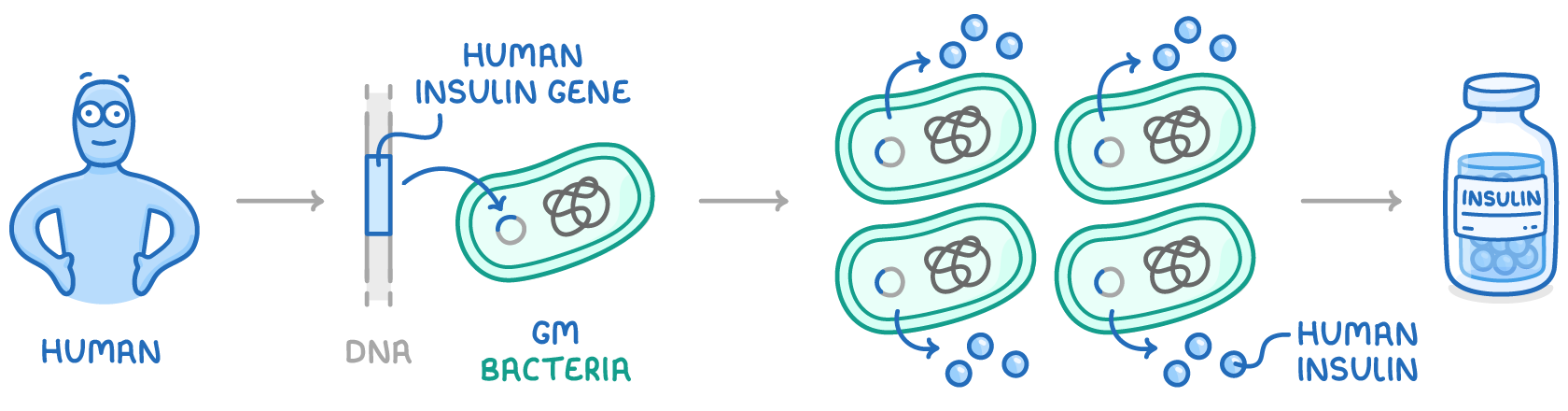
- The gene that codes for human insulin is transferred into bacteria, so the bacteria become genetically modified (GM) to carry the human insulin gene.
- Because the gene codes for insulin, the bacteria now make human insulin as they grow.
Producing insulin on a large scale
- The modified bacteria are grown in very large numbers.
- As they reproduce, they keep producing insulin, which is collected and used to treat people with diabetes.
- Growing huge populations of fast-reproducing bacteria means a large, steady supply of human insulin can be made.
- The insulin made this way is human insulin - identical to the insulin the body normally makes itself.
GM crops - Herbicide and insect (Bt) resistance
Crops can be genetically modified (GM) to protect their yield by giving them resistance to herbicides or to insect pests.
Herbicide resistance
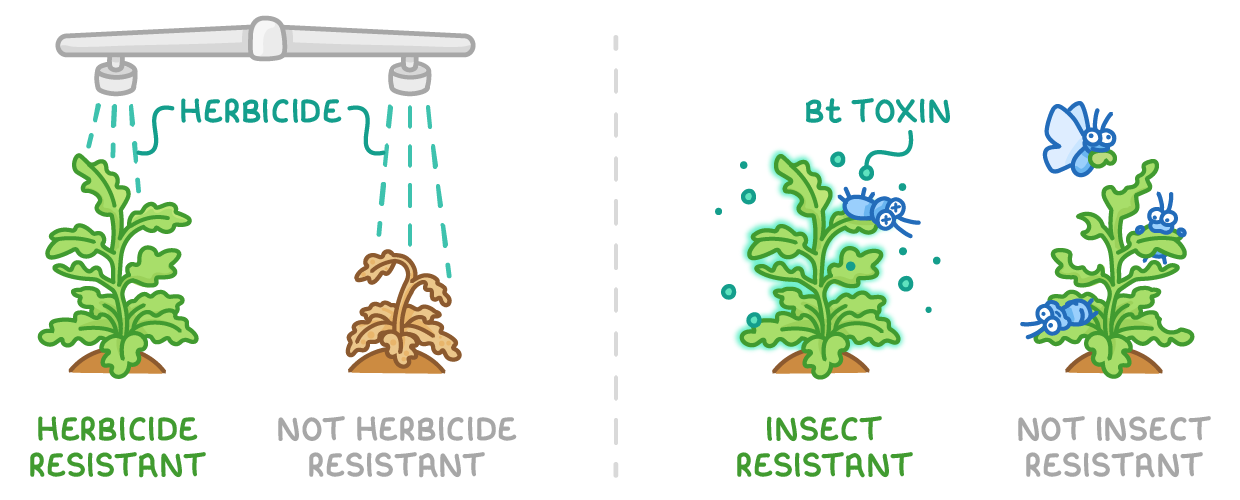
- A herbicide-resistant crop carries a gene that lets it survive a particular weedkiller (herbicide).
- Farmers can then spray the whole field with that herbicide to kill the weeds competing with the crop, without harming the crop itself.
- Example: one type of soya has been modified to resist the herbicide glyphosate.
Insect (Bt) resistance
- An insect-resistant crop carries a gene that protects it from the insects that would normally eat it.
- A common example uses the Bt gene from the bacterium Bacillus thuringiensis, which makes a toxin harmful to certain insect pests.
- Crops such as maize and cotton carrying this gene are protected from insect larvae.
- Because the crop defends itself, fewer plants are eaten, so the crop is protected and the yield is higher.
GM crops - Improved nutrition with golden rice
- Crops can be genetically modified to improve their nutritional value.
- The best-known example is golden rice.
Why golden rice was developed
- In some parts of the world, people rely heavily on rice, which contains very little vitamin A.
- A lack of vitamin A can cause blindness.
How golden rice works
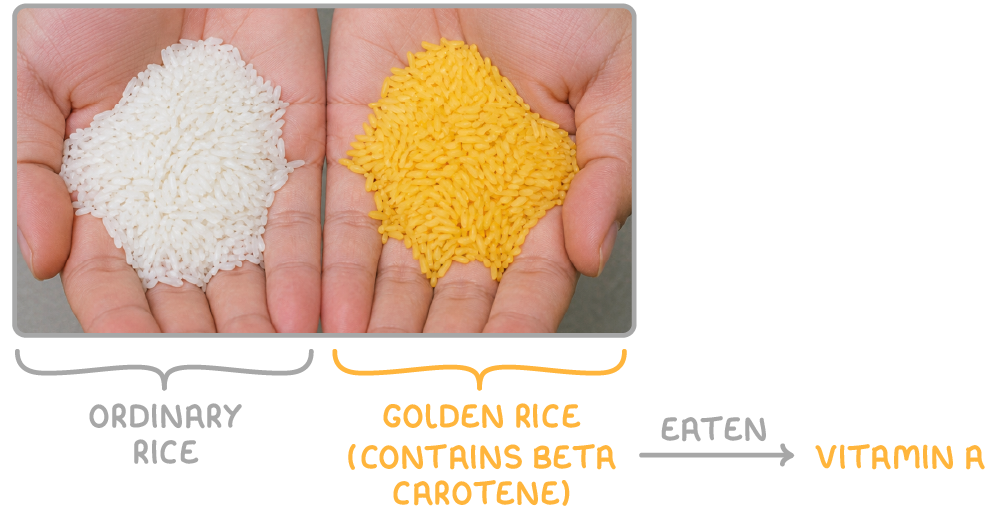
- Golden rice has been engineered to make beta-carotene - the orange substance also found in carrots - by adding a gene that controls beta-carotene production.
- When the golden rice is eaten, the body converts the beta-carotene into vitamin A.
- This helps to prevent vitamin A deficiency in populations whose diets would otherwise be short of it.
Why bacteria are used in genetic modification
Bacteria are the organism most often used in genetic modification, for several reasons.
- Rapid reproduction - In the right conditions they reproduce very quickly, so a single modified bacterium can be grown into millions of identical cells in a short time - each one carrying and using the inserted gene.
- Making complex molecules - They can make complex molecules such as human proteins, which is what makes them useful for producing substances like insulin.
- Few ethical concerns - Modifying and growing bacteria raises few ethical concerns, unlike the modification of animals and plants, which some people object to.
- Plasmids as vectors - Bacteria contain plasmids (small rings of DNA, separate from the main chromosome) that are easy to take out, modify, and transfer between cells. This makes them ideal as the vectors that carry a new gene into the bacterium.
TermDefinition
Genetic engineeringThe process of changing an organism's genome, usually by inserting a gene from another organism, to give it a desired characteristic.
Transgenic organismAn organism that contains genes transferred from a different species.
Vector (genetic engineering)A carrier, such as a plasmid or a virus, used to transfer a gene into a host cell.
PlasmidA small ring of DNA, separate from the main chromosome, found in bacteria and often carrying extra genes.