4.8 - Genetic Engineering
What genetic engineering and GM organisms are
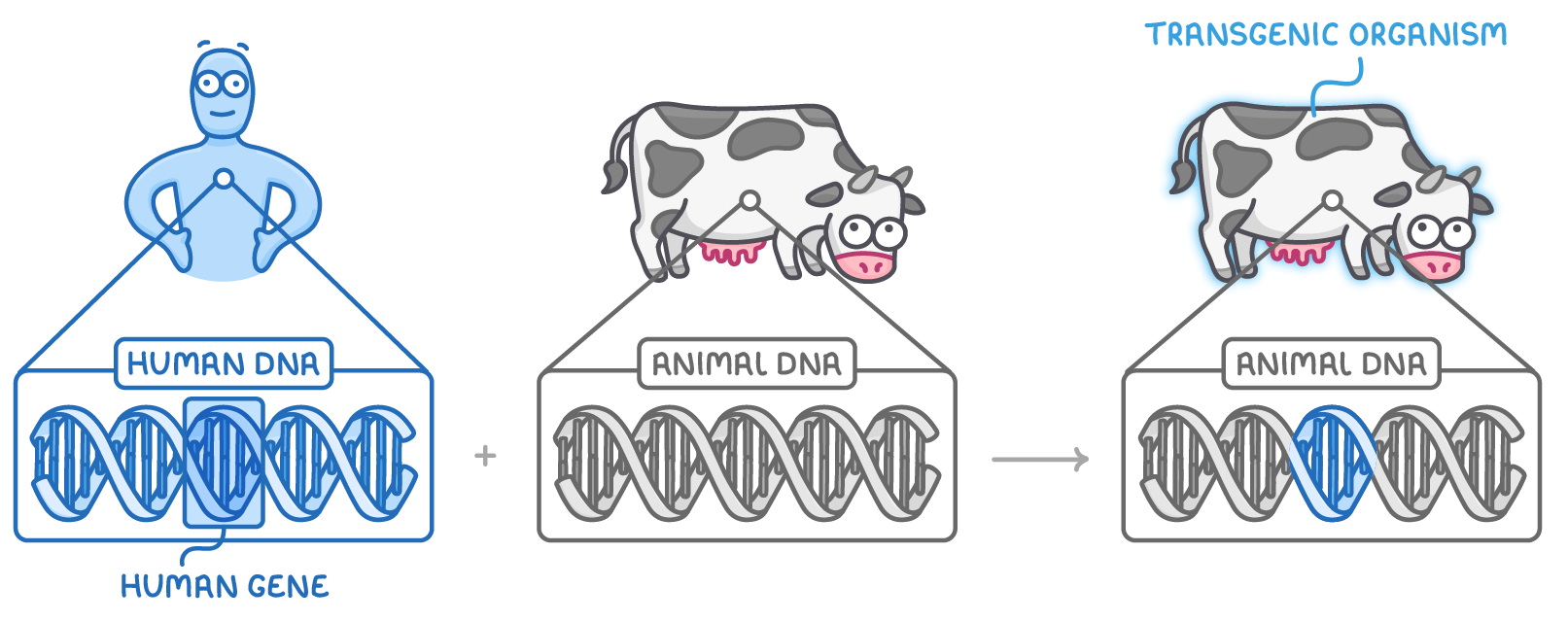
- Genetic engineering (also called genetic modification) is the transfer of a gene for a desirable characteristic from one organism's genome into another organism, so the second organism develops that characteristic.
- The genome is the complete set of genetic material in an organism.
- Genetic engineering changes the genome by removing, changing, or inserting individual genes - most often by adding a gene taken from a different organism.
GM and transgenic organisms
- An organism changed in this way is described as genetically modified (GM).
- Because the gene often comes from a different species, it's also called a transgenic organism - one that contains genes brought in from another type of organism.
- You can have transgenic bacteria, animals, and plants.
- Sometimes the gene is transferred while the organism is at an early stage of development (such as an egg or embryo), so the whole organism grows with the new characteristic in all its cells.
How genetic engineering is used
- Bacteria - Modified to make human insulin to treat diabetes
- Crops - Modified to resist insects, herbicides, or disease, or to improve the size and quality of their fruit
- Sheep - Modified to make useful substances such as drugs in their milk
GM bacteria make human insulin
- Making human insulin - the hormone used to treat diabetes - was one of the first and most important uses of genetic engineering.
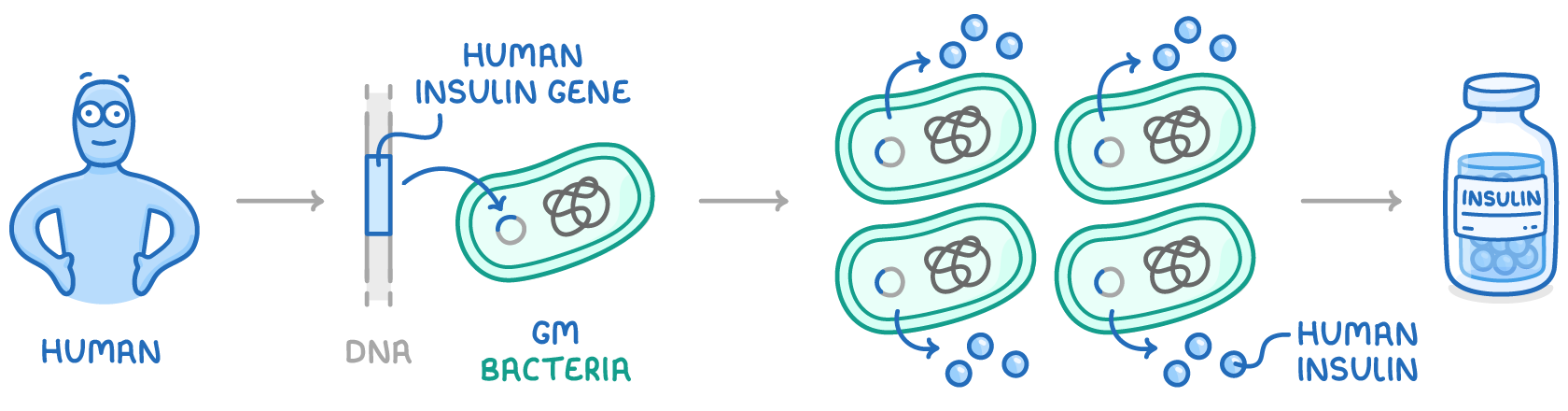
- The gene that codes for human insulin is transferred into bacteria, so the bacteria become genetically modified (GM) to carry the human insulin gene.
- Because the gene codes for insulin, the bacteria now make human insulin as they grow.
Producing insulin on a large scale
- The modified bacteria are grown in very large numbers.
- As they reproduce, they keep producing insulin, which is collected and used to treat people with diabetes.
- Growing huge populations of fast-reproducing bacteria means a large, steady supply of human insulin can be made.
- The insulin made this way is human insulin - identical to the insulin the body normally makes itself.
GM crops - Herbicide and insect (Bt) resistance
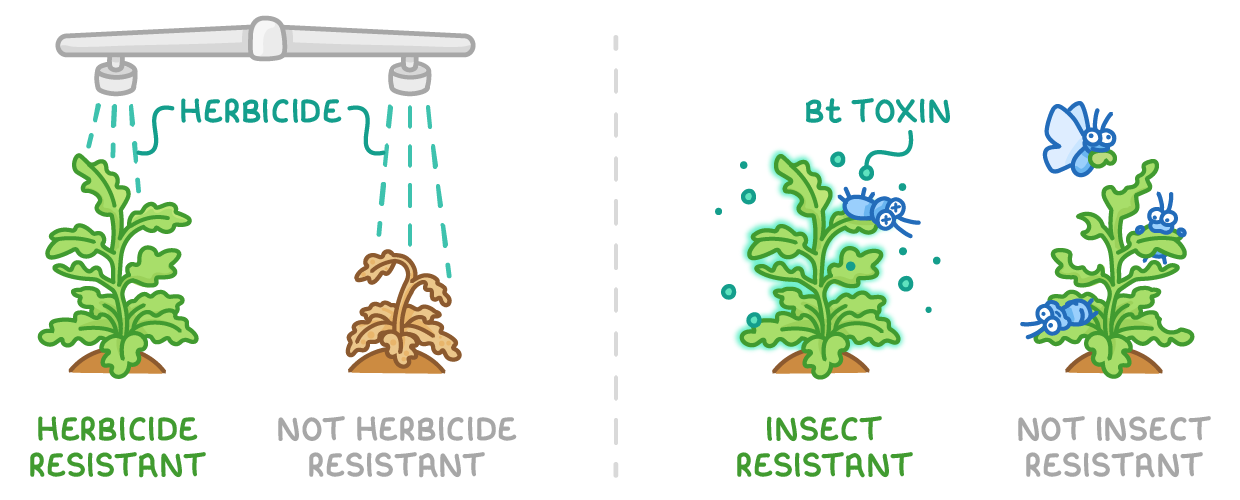
Crops can be genetically modified (GM) to protect their yield by giving them resistance to herbicides or to insect pests.
Herbicide resistance
- A herbicide-resistant crop carries a gene that lets it survive a particular weedkiller (herbicide).
- Farmers can then spray the whole field with that herbicide to kill the weeds competing with the crop, without harming the crop itself.
- Example: one type of soya has been modified to resist the herbicide glyphosate.
Insect (Bt) resistance
- An insect-resistant crop carries a gene that protects it from the insects that would normally eat it.
- A common example uses the Bt gene from the bacterium Bacillus thuringiensis, which makes a toxin harmful to certain insect pests.
- Crops such as maize and cotton carrying this gene are protected from insect larvae.
- Because the crop defends itself, fewer plants are eaten, so the crop is protected and the yield is higher.
Gene therapy and gene technology in medicine
- Gene technology can be used in medicine to treat diseases caused by faulty genes.
- In gene therapy, a working copy of a gene is inserted into the cells of a person with an inherited disorder.
- Those cells can then carry out the function the faulty gene could not.
- This offers the promise of treating inherited disorders directly, rather than only managing their symptoms.
Practical and ethical concerns
- Stress and anxiety - Knowing from an early age that you carry genes making you susceptible to a serious disease can cause considerable stress, even if the disease never develops.
- Pressure not to have children - People found to carry "problem" genes could be pressured not to have children.
- Discrimination - Employers and insurers could discriminate against people who are genetically more likely to develop a disease, for example by refusing life insurance or jobs.
- Cost - Drugs tailored to particular people are expensive to develop, which could lead to a two-tier health service in which only wealthier people can afford the newest treatments.
- Uncertainty - It is unclear whether changing genes might do more harm than good, including unknown effects on future generations.
TermDefinition
Genetic engineeringThe process of changing an organism's genome, usually by inserting a gene from another organism, to give it a desired characteristic.
Transgenic organismAn organism that contains genes transferred from a different species.
Gene therapyA treatment for an inherited disorder that inserts a working copy of a gene into a person's cells.