Plant Disease & Defences - exam practice
Plant Disease & Defences
Question 1 of 5
A farmer grows barley in his field.
His crop is infected with barley powdery mildew, a type of fungus.
Describe how fungal infections can spread and how they enter plant leaves.
The farmer wants to prevent their crops from getting powdery mildew.
Explain how burning plants after the barley has been harvested can protect the crops.
Many plants have evolved defence mechanisms.
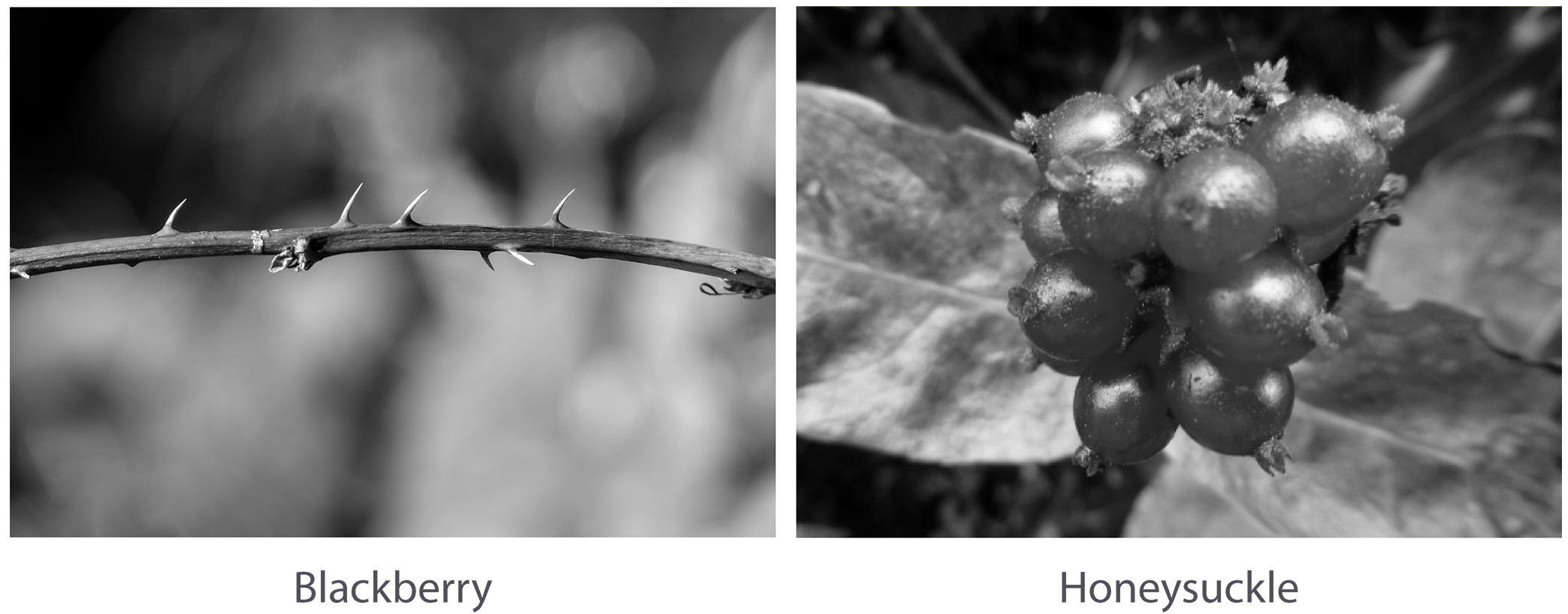
The blackberry plant has evolved to have sharp thorns. What type of defence response are thorns?
How do the thorns defend the blackberry plant?
The berries of the honeysuckle plant are poisonous.
What type of defence response is this?
How will the poisonous berries help the honeysuckle plant to survive?
The leaves of some plants release oils onto their surface.
Suggest how the production of oil on the surface of a leaf may protect the plant.
Explain how different types of organism defend themselves against microorganisms.
A gardener is testing the effect of using different fertilisers on the growth of plants.
The gardener decided to measure the growth by counting the number of leaves.
Suggest a better method of measuring the growth of the plants.
Give two reasons why your method is better than the gardener’s method.
A scientist investigated the effect of nitrate ion concentration on barley growth.
She placed barley seedlings in five test tubes containing different concentrations of nitrate fertiliser.
After a week, the scientist measured the length of the seedlings.
Her results were recorded in a table.
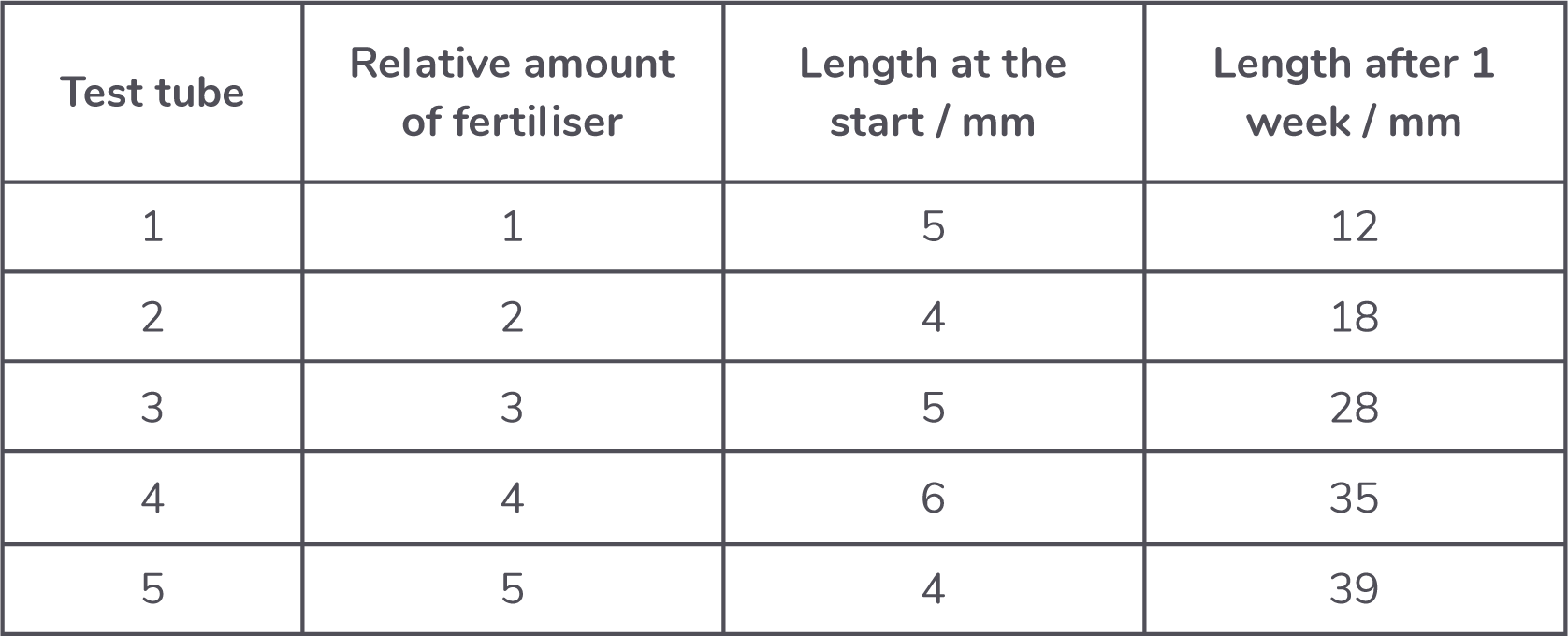
What should the scientist have used as a control for this investigation?
Which seedling showed the largest change in length?
Explain how nitrate ions were absorbed by the seedlings.