8.2 - Fermenters
Fermenter design and the conditions controlled
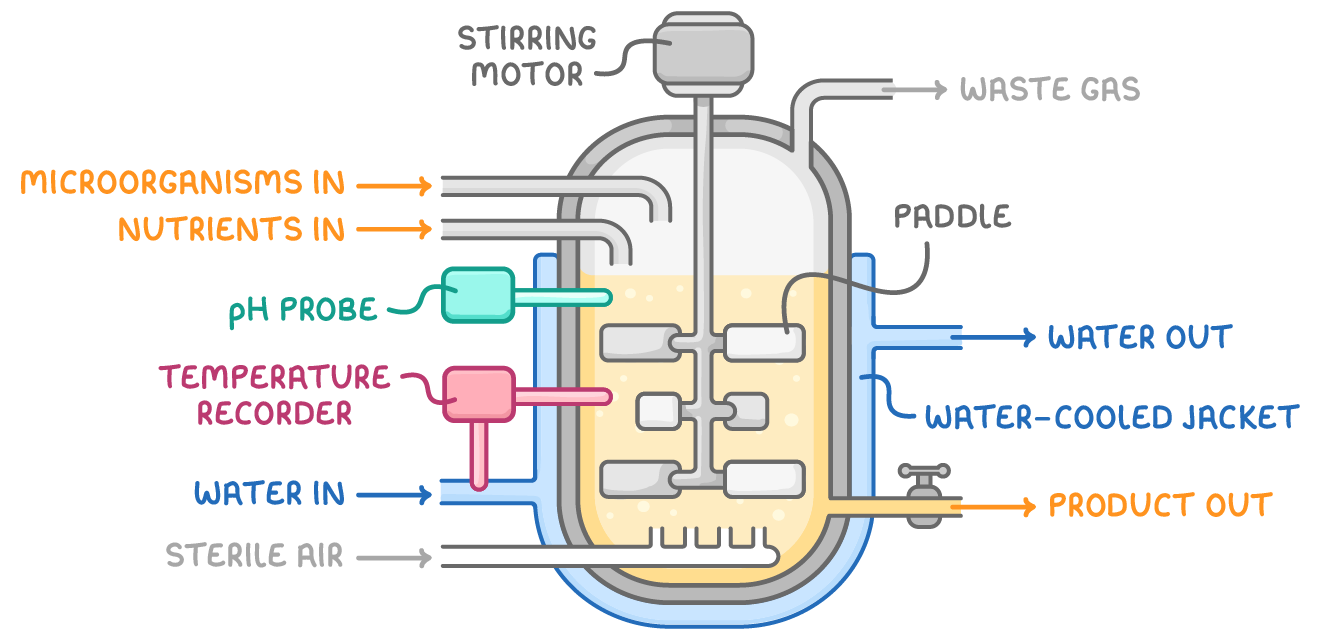
- Microorganisms are grown on a large scale inside an industrial fermenter - a large vessel filled with a liquid culture medium.
- Conditions inside are monitored and held at the optimum levels for growth. The more the microorganisms grow, the greater the yield of product.
Conditions controlled inside the fermenter
- Nutrients - The liquid culture medium supplies all the nutrients the microorganisms need to grow and reproduce.
- Temperature - Monitored and kept at the optimum. The microorganisms release heat as they respire, so a water-cooled jacket around the vessel removes excess heat and stops it getting hot enough to denature the enzymes.
- pH - A pH probe monitors the pH, which is kept at the optimum (by adding acid or alkali) so the microorganisms' enzymes work as efficiently as possible.
- Oxygen - If the microorganisms respire aerobically, sterile air is pumped in to supply oxygen, so they can always release the energy needed for growth.
- Agitation - Paddles stir and circulate the medium, keeping the microorganisms in contact with fresh nutrients and keeping temperature and pH even throughout.
- Sterility - The vessel is sterilised between uses with superheated steam to kill unwanted microbes. These aseptic conditions stop other organisms competing with the culture and stop the product being contaminated.
- Waste removal - Waste gases such as carbon dioxide are let out through an exhaust so they don't build up and spoil the growing conditions.
Harvesting the product
- When the culture is fully grown, the medium is drained off and filtered.
- The product is then extracted and purified.
TermDefinition
FermenterA large industrial vessel used to grow microorganisms in carefully controlled conditions.
Culture mediumA liquid or gel containing the nutrients that microorganisms or cells need to grow.
Aseptic conditionsSterile conditions that are completely free from unwanted microorganisms.