1.14 - Clearing the Airways
Cilia and mucus clear the airways
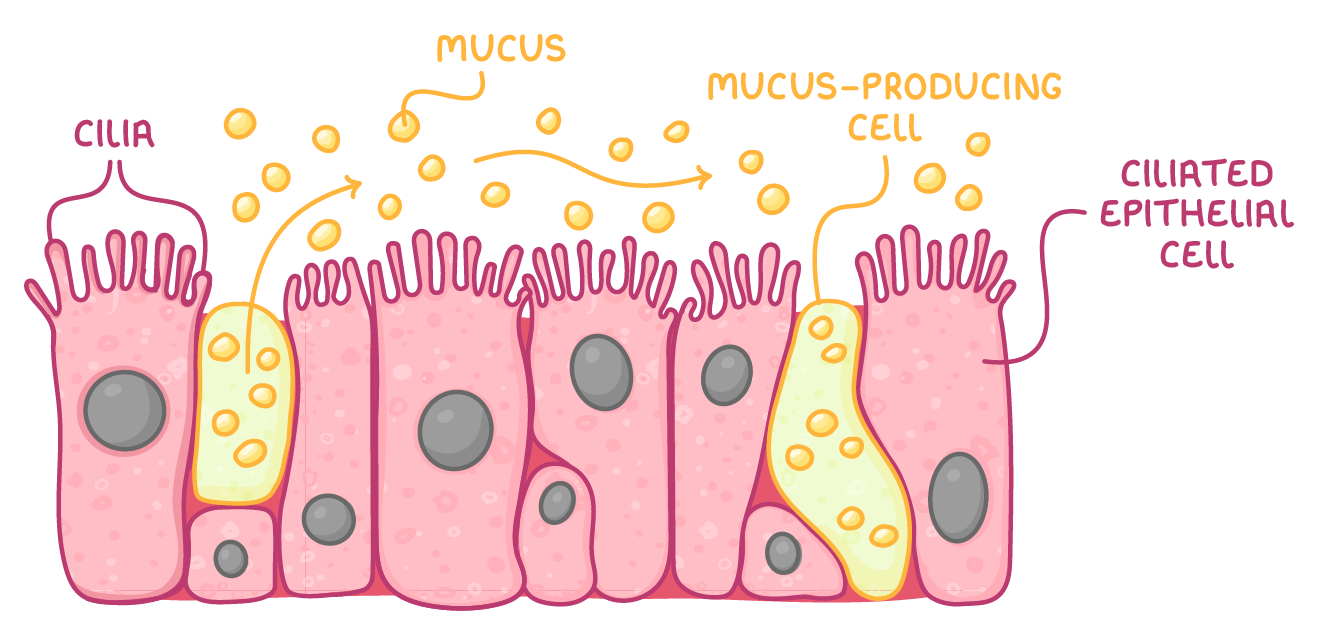
- The trachea and bronchi (the tubes carrying air to the lungs) are lined with ciliated epithelial cells.
- These cells have cilia - tiny hair-like structures - along their upper surface.
- Among them are other cells that produce a sticky substance called mucus.
How they work together
- The mucus traps small particles of dust and any bacteria breathed in with the air, so they stick to it instead of travelling down into the lungs.
- The cilia beat back and forth in a steady sweeping motion, moving the mucus (with everything caught in it) up the airways towards the throat.
- There the mucus is swallowed and passed harmlessly down to the stomach.
- Working together, the mucus and cilia keep the lungs clear of particles and bacteria in the air.
How smoking damages cilia and mucus
- The airways are normally cleared by mucus (which traps particles and bacteria) and cilia (tiny hairs that sweep the mucus up to the throat).
- Cigarette smoke interferes with this airway-clearing system in two ways:
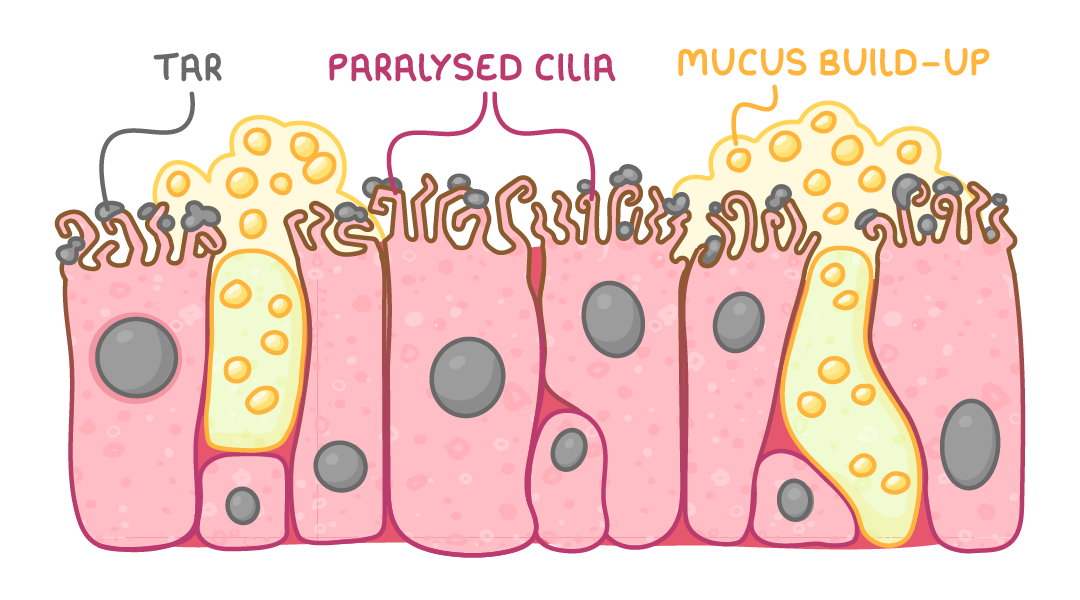
- Its particles clog up the mucus in the airways
- Its chemicals - mainly the tar - paralyse the cilia so they can no longer beat
- With the cilia stopped, the mucus and everything trapped in it can't be swept up to the throat, so it builds up in the airways instead.
Consequences of the build-up
- More infections - Bacteria that the mucus and cilia would normally remove are now much more likely to reach the lungs, so chest and respiratory infections become more common.
- Restricted airflow - The trapped mucus partly blocks the airways, restricting how easily the smoker can move air in and out of the lungs.
- Persistent cough - Tar irritates the lining of the bronchi and bronchioles, making them produce even more mucus. Because the damaged cilia can't clear it, the smoker develops a persistent cough.
The harmful chemicals in tobacco smoke
- Tobacco smoke contains several harmful substances.
- Tar is the main cause of lung disease - it irritates and damages the airways.
- Nicotine is the substance that makes smoking addictive, which is why people find it so hard to stop even when they know the harm it does.

Diseases caused by tobacco smoke
- Chronic bronchitis - Tar irritates and damages the airways, so the bronchi and bronchioles become narrowed and inflamed.
- Emphysema - Tar damages the walls of the alveoli (the tiny air sacs where gas exchange happens). As the alveoli break down, the surface area for gas exchange is reduced, so the lungs cannot take in oxygen as well.
- Lung cancer - Chemicals in the smoke cause lung cells to divide in an uncontrolled way, forming a tumour.
TermDefinition
CiliaTiny hair-like structures on the surface of some cells that beat to move substances, such as mucus, in one direction.
MucusA thick, sticky fluid made by cells lining passages in the body, such as the airways, where it traps dust particles and bacteria.
TarA sticky mixture of chemicals in tobacco smoke that paralyses cilia and causes lung diseases, including lung cancer.
NicotineThe addictive substance in tobacco smoke.
Chronic bronchitisA disease caused by tar irritating the airways, leaving them narrowed and inflamed.
EmphysemaA disease in which the walls of the alveoli break down, reducing the surface area for gas exchange.