Hydrocarbons - exam practice
Hydrocarbons
Question 1 of 4
This question is about the properties of hydrocarbons.
State the name of the hydrocarbon in the diagram below.
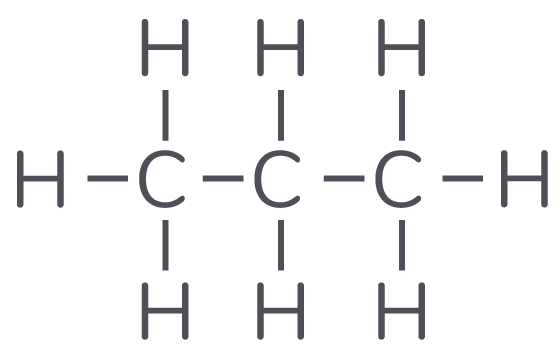
Draw the structure of butene.
Explain what is meant by the term saturated hydrocarbon.
This question is about hydrocarbons.
Explain what is meant by the term hydrocarbon.
The table below shows the chemical formula for the first four alkanes.
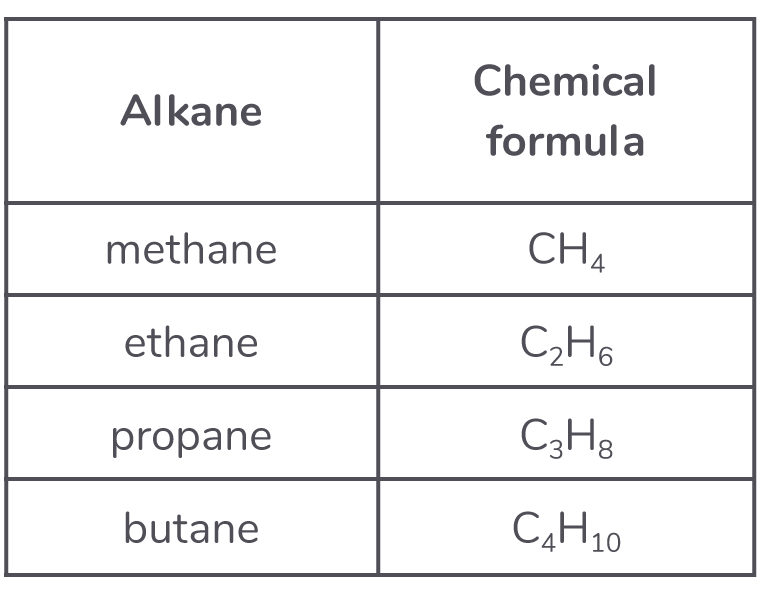
State the general formula for alkanes.
Propene (C3H6) is an alkene.
Describe the test that can be done to distinguish between a sample of propane and a sample of propene.
This question is about the separation of crude oil, a mixture of different hydrocarbons.
State the name of the industrial process used to separate crude oil into fractions and outline the process.
Bitumen is a fraction that is removed near the base of the fractioning column.
State one use of bitumen.
The table below shows the boiling points for the first 10 alkanes.
Plot a bar graph to show how the temperature varies with length of hydrocarbon.
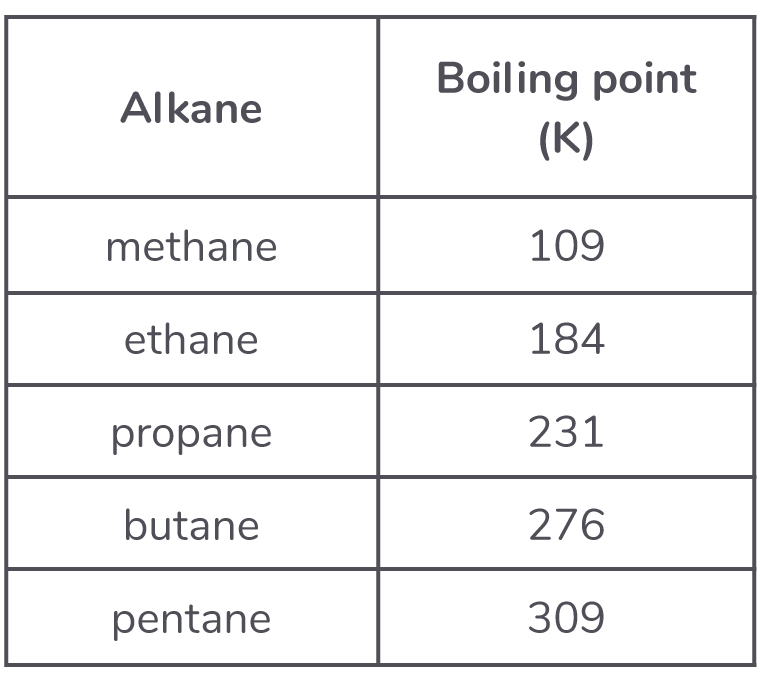
Describe the trend shown by the graph.
This question is about the process of fractional distillation.
The table below shows the boiling points of different fractions.
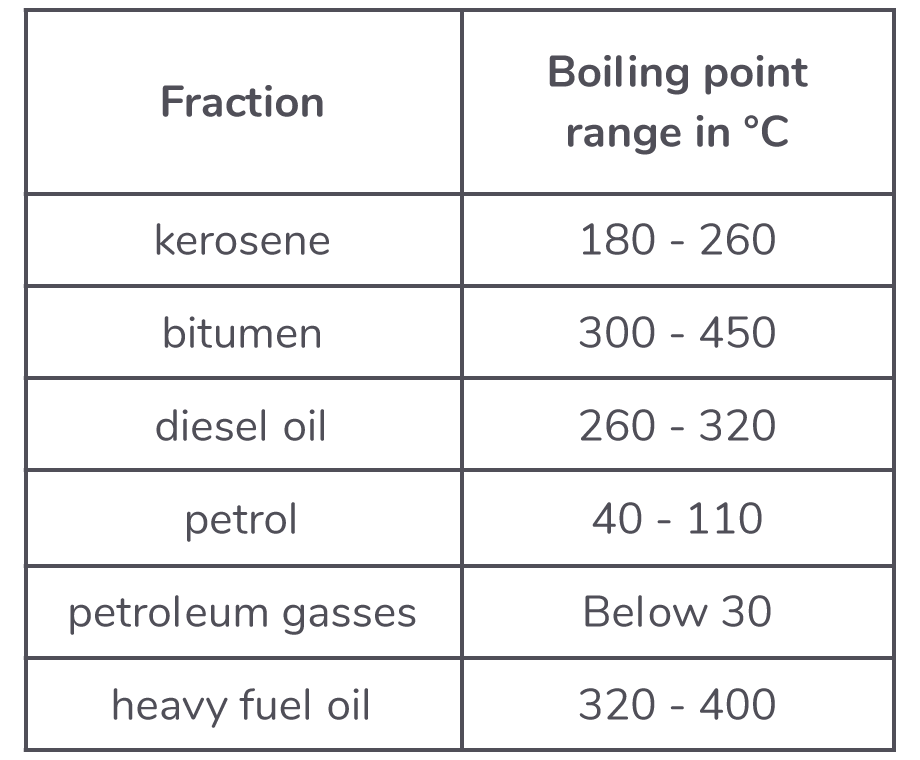
Label the fractions on the fractioning column to show where they are extracted.
Name the fraction that is used as aviation fuel.
Kerosene has different uses and properties to those of bitumen.
State two differences, other than boiling point, between the properties of kerosene and bitumen.
One of the alkanes found in petrol has the displayed formula below.
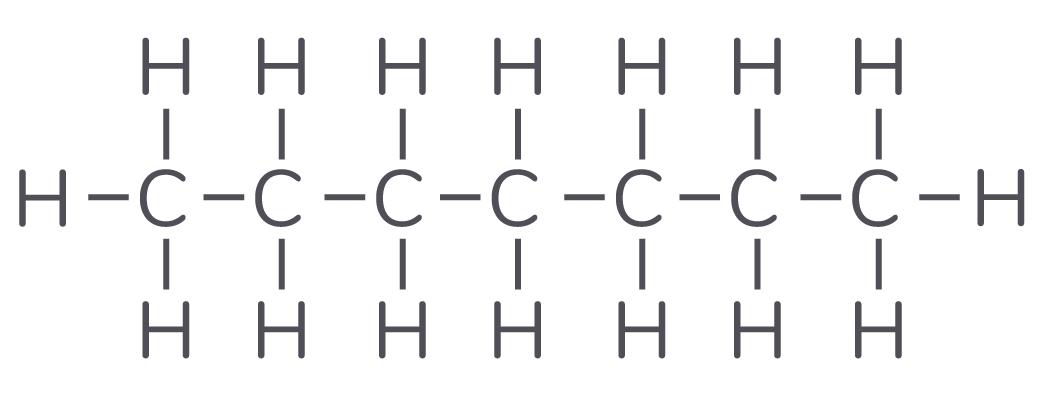
Determine the molecular formula of this alkane.
When the fraction in part d) is combusted, it reacts with oxygen in the air to form carbon dioxide and water.
Write a balanced chemical equation for this reaction.