10.4 - Evaluating Extraction Methods
Phytomining and bioleaching
- High-grade copper ores are running out, making it necessary to extract copper from low-grade ores and mining waste heaps.
- Two biological methods concentrate the metal:
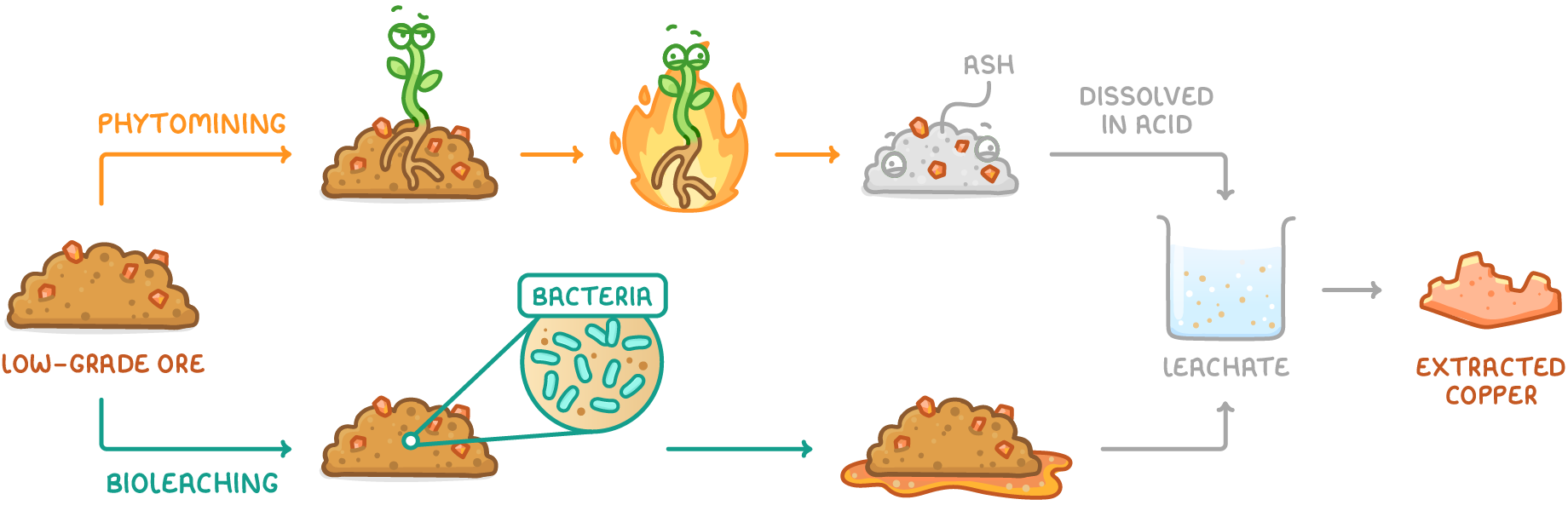
- Phytomining - Plants are grown on low-grade ore and absorb copper compounds through their roots. The plants are harvested and burnt, leaving ash with a high concentration of copper compounds.
- Bioleaching - Bacteria break down low-grade ore, converting insoluble copper compounds into soluble ones.
- Both methods end with a solution of dissolved copper compounds called a leachate, from which the copper is extracted. In phytomining, the ash is dissolved in acid to make it.
Advantages and disadvantages compared to traditional mining
| Advantages | Disadvantages |
|---|---|
| Extracts metal from low-grade ores that would otherwise be wasted | Much slower process |
| Requires less digging and rock disposal, causing less landscape damage | Phytomining depends on plant growing seasons |
| Uses less energy than smelting | Leachates are acidic and can pollute water supplies if they leak |
TermDefinition
Low-grade oreA rock containing only a small amount of a metal or metal compound.
PhytominingA method of extracting metals from low-grade ores using plants. The plants absorb metal compounds from the soil and are then harvested and burned, leaving ash that contains the metal compounds.
BioleachingA method of extracting metals from low-grade ores (ores that contain only a small amount of metal), using bacteria that produce a solution (leachate) containing metal compounds.
LeachateA solution containing metal compounds, produced during phytomining or bioleaching.
Key points to remember
How were these notes?