4.2 - Redox
Oxidation and reduction as oxygen transfer
- Oxidation is the gain of oxygen by a substance.
- Reduction is the loss of oxygen from a substance.
Examples
- When magnesium burns in oxygen to form magnesium oxide, the magnesium gains oxygen, so it has been oxidised:
- 2Mg + O2 → 2MgO
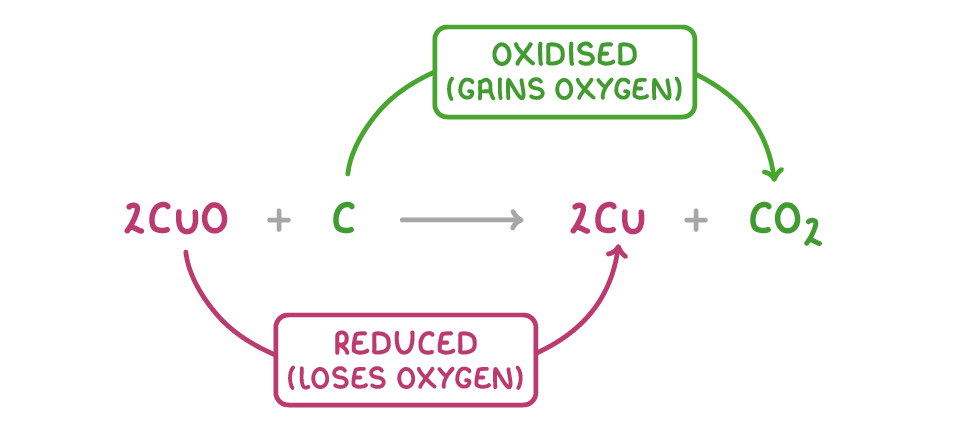
- When copper(II) oxide reacts with carbon, the copper(II) oxide loses oxygen and is reduced, while the carbon gains oxygen and is oxidised:
- 2CuO + C → 2Cu + CO2
- A reaction where oxidation and reduction happen together is a redox reaction.
Following hydrogen instead
- Losing hydrogen is oxidation, gaining hydrogen is reduction.
- When hydrogen and chlorine react, the chlorine gains hydrogen, so it has been reduced:
- H2 + Cl2 → 2HCl
Oxidation and reduction as electron transfer
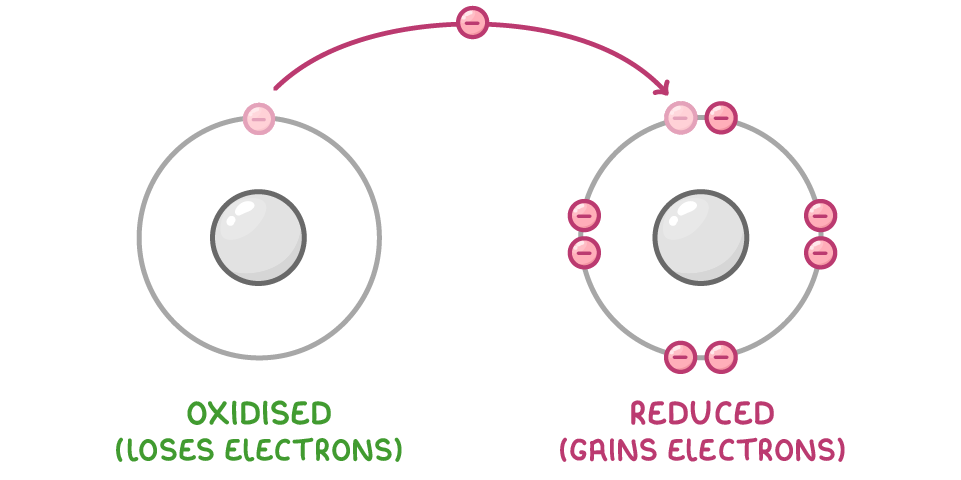
- Oxidation is the loss of electrons.
- Reduction is the gain of electrons.
- Remember: OIL RIG (Oxidation Is Loss, Reduction Is Gain).
- Electrons are transferred from one substance to another, so oxidation and reduction always occur together in a redox reaction.
Worked example - Sodium and chlorine
2Na + Cl2 → 2NaCl
- Each sodium atom starts neutral and becomes Na+ (loses one electron), so sodium is oxidised.
- Each chlorine atom starts neutral and becomes Cl- (gains one electron), so chlorine is reduced.
Identifying oxidation and reduction from charges
- An atom that becomes a positive ion loses electrons: oxidised.
- An atom that becomes a negative ion gains electrons: reduced.
- A positive ion that becomes an atom gains electrons: reduced.
TermDefinition
OxidationThe gain of oxygen by a substance. In terms of electrons, it is the loss of electrons.
Redox reactionA reaction where oxidation and reduction happen together.
ReductionThe loss of oxygen by a substance. In terms of electrons, it is the gain of electrons.
Key points to remember
How were these notes?