9.3 - Carbon Footprints
What a carbon footprint is
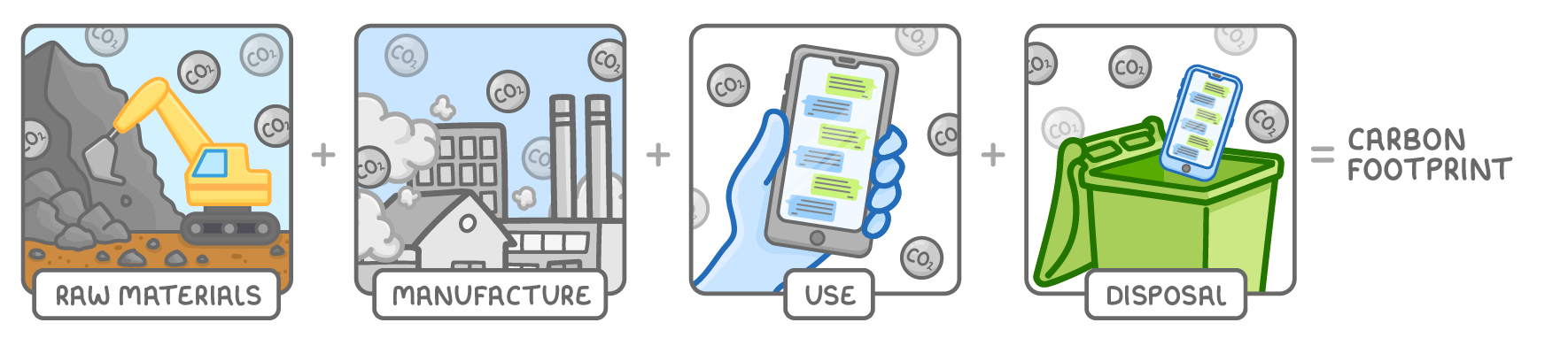
A carbon footprint is the total amount of carbon dioxide and other greenhouse gases released over the full life cycle of a product (e.g. a mobile phone), service (e.g. a bus journey), or event (e.g. a music festival).
Why an exact figure is hard to work out
- Calculating an exact carbon footprint is very difficult because so many separate emissions must be counted across the entire life cycle (sourcing raw materials, manufacture, use, and disposal).
- A rough calculation is still useful for identifying the worst emitters so reductions can be targeted.
Reducing a carbon footprint
A carbon footprint is reduced by cutting the carbon dioxide and methane released at any stage of a life cycle.
Actions that reduce a footprint
- Renewable or nuclear energy - Using these instead of fossil fuels.
- More efficient processes - Using less energy and producing less waste (decomposing waste releases methane, so cutting waste reduces emissions).
- Carbon capture and storage - Capturing carbon dioxide from burning fossil fuels before it reaches the atmosphere, and storing it deep underground (e.g. old oil wells).
- Taxing emissions - Taxing companies or individuals based on how much greenhouse gas they emit (e.g. taxing cars on emissions) to encourage fuel-efficient choices.
- Capping emissions - Limiting the total greenhouse gases a company can produce, and selling licences up to that cap.
Why making these reductions is difficult
- Many alternative technologies are still being developed and can't yet replace fossil fuels completely.
- Switching away from fossil fuels can harm economic growth, which is a major concern for developing countries.
- International agreements are hard to reach because countries won't commit unless they're confident others will do the same.
- Individuals may be reluctant to change their lifestyles without enough education on why the changes are needed and how to make them.
TermDefinition
Carbon footprintThe total amount of carbon dioxide and other greenhouse gases emitted over the full life cycle of a product, service or event.
Carbon capture and storageA process that captures carbon dioxide from burning fossil fuels and stores it deep underground to prevent it reaching the atmosphere.
Key points to remember
How were these notes?