5.1 - Exothermic & Endothermic Reactions
Exothermic and endothermic reactions
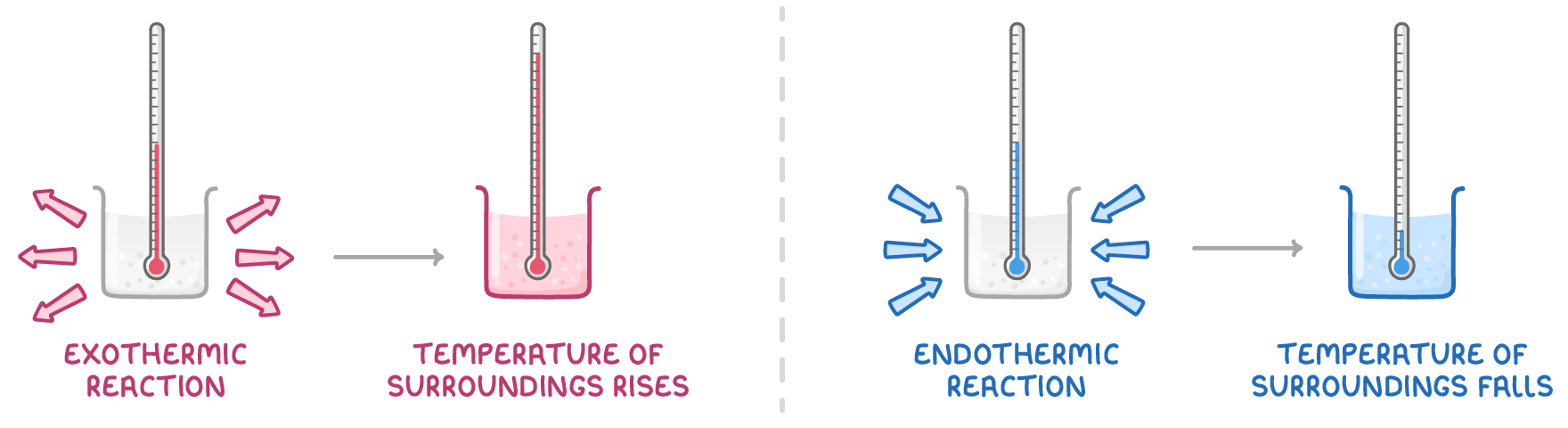
- In an exothermic reaction, energy is transferred to the surroundings, so the temperature of the surroundings rises.
- In an endothermic reaction, energy is taken in from the surroundings, so the temperature of the surroundings falls.
Energy is conserved
- Energy can't be created or destroyed, only transferred.
- In an exothermic reaction, the products hold less energy than the reactants because energy was released to the surroundings.
- In an endothermic reaction, the products hold more energy than the reactants because energy was taken in from the surroundings.
Sign of the energy change
- Negative (−) - Energy given out (exothermic).
- Positive (+) - Energy taken in (endothermic).
| Exothermic reaction | Endothermic reaction | |
|---|---|---|
| Energy is | transferred to the surroundings | taken in from the surroundings |
| Temperature of the surroundings | rises | falls |
| Compared with reactants, products | hold less energy | hold more energy |
Reaction profiles
A reaction profile (or reaction pathway diagram) shows how the energy stored in the chemicals changes during a reaction.
The axes and levels
- Vertical axis - Energy stored in the chemicals.
- Horizontal axis - Progress of the reaction (from left to right).
- Reactants and products are drawn as horizontal lines.
Reading direction from the levels
- Exothermic - The products are at a lower energy level than the reactants because energy is transferred to the surroundings.
- Endothermic - The products are at a higher energy level than the reactants because energy is taken in from the surroundings.
- The vertical gap between the reactants and products represents the overall energy change.

TermDefinition
Exothermic reactionA reaction where energy is transferred to the surroundings, so the temperature of the surroundings rises.
Endothermic reactionA reaction where energy is taken in from the surroundings, so the temperature of the surroundings falls.
Reaction profileA diagram showing how the energy stored in the chemicals changes during a reaction.