7.12 - Exothermic & Endothermic Reactions
Exothermic and endothermic reactions
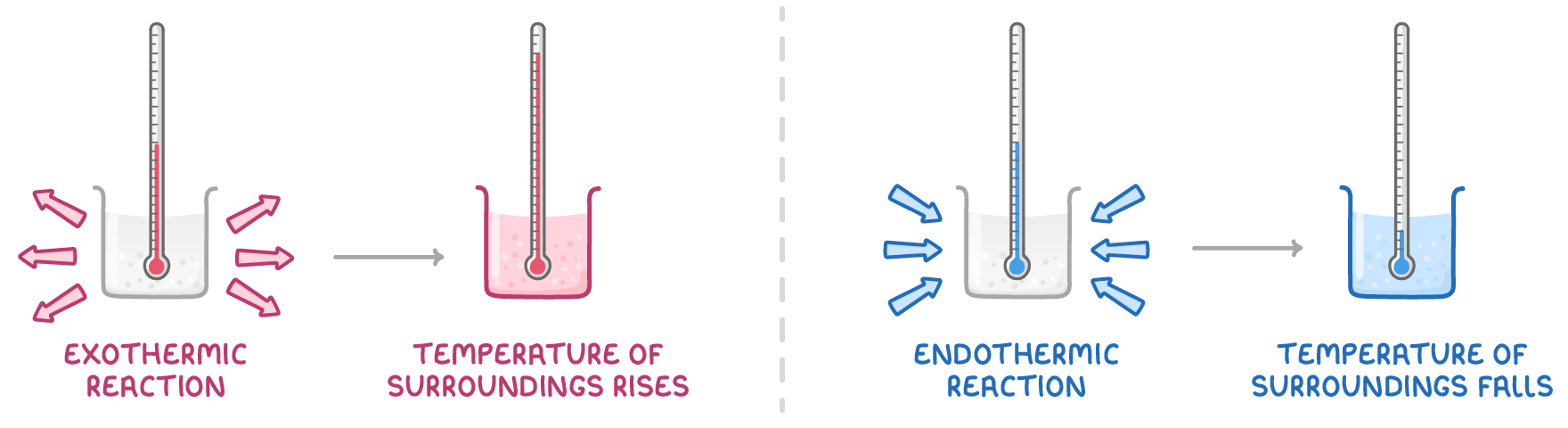
- In an exothermic reaction, energy is transferred to the surroundings, so the temperature of the surroundings rises.
- In an endothermic reaction, energy is taken in from the surroundings, so the temperature of the surroundings falls.
Energy is conserved
- Energy can't be created or destroyed, only transferred.
- In an exothermic reaction, the products hold less energy than the reactants because energy was released to the surroundings.
- In an endothermic reaction, the products hold more energy than the reactants because energy was taken in from the surroundings.
Sign of the energy change
- Negative (−) - Energy given out (exothermic).
- Positive (+) - Energy taken in (endothermic).
| Exothermic reaction | Endothermic reaction | |
|---|---|---|
| Energy is | transferred to the surroundings | taken in from the surroundings |
| Temperature of the surroundings | rises | falls |
| Compared with reactants, products | hold less energy | hold more energy |
Exothermic and endothermic examples
Exothermic reactions
- Combustion - Burning a substance in oxygen gives out a large amount of energy.
- Oxidation - Reactions such as iron rusting in air give out energy.
- Neutralisation - An acid reacting with a base or an alkali gives out energy.
Endothermic reactions
- Thermal decomposition - Breaking down a compound by heating (e.g. calcium carbonate decomposing into calcium oxide and carbon dioxide).
- Citric acid and sodium hydrogencarbonate - Reacting these together causes the temperature of the surroundings to fall.
Everyday uses
- Hand warmers - Use the exothermic oxidation of iron in air to release heat.
- Self-heating cans - Use an exothermic reaction in the base to warm a drink.
- Cold packs - Use an endothermic reaction to cool an injury immediately without needing a freezer.
Reaction profiles
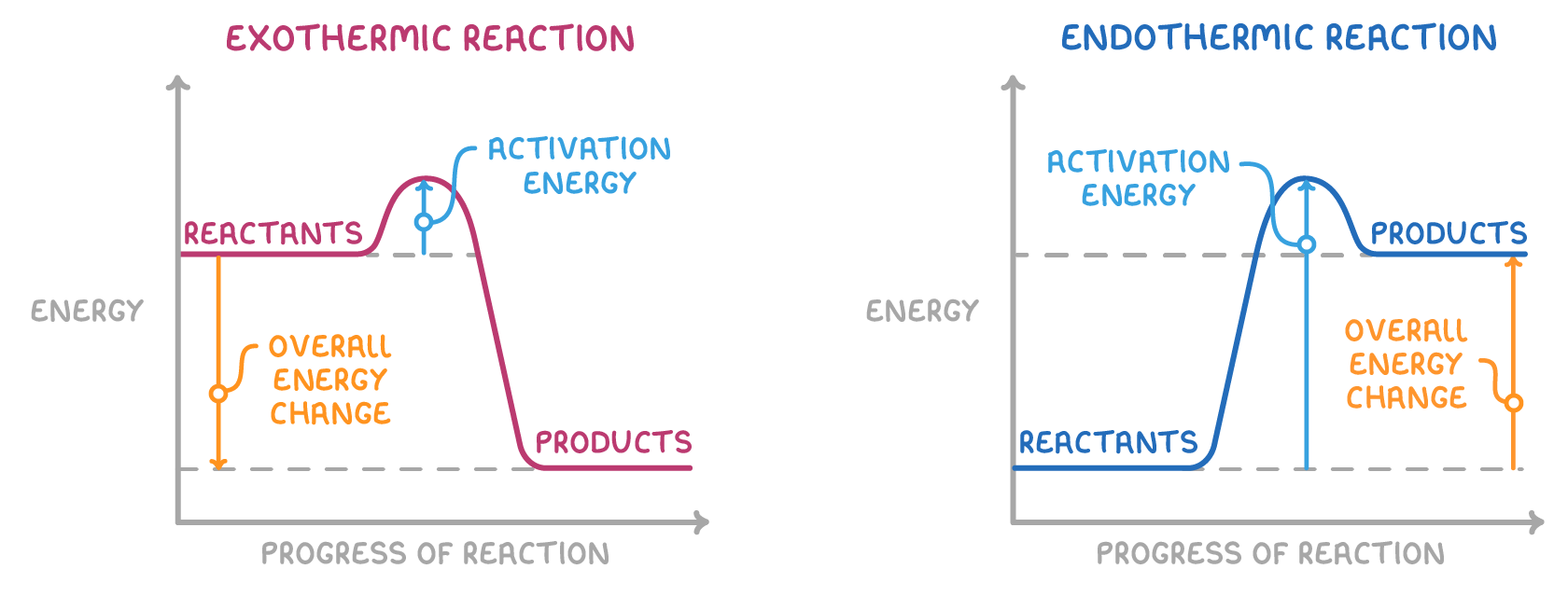
A reaction profile (or reaction pathway diagram) shows how the energy stored in the chemicals changes during a reaction.
The axes and levels
- Vertical axis - Energy stored in the chemicals.
- Horizontal axis - Progress of the reaction (from left to right).
- Reactants and products are drawn as horizontal lines.
Reading direction from the levels
- Exothermic - The products are at a lower energy level than the reactants because energy is transferred to the surroundings.
- Endothermic - The products are at a higher energy level than the reactants because energy is taken in from the surroundings.
- The vertical gap between the reactants and products represents the overall energy change.
Activation energy on a profile
- The curve rises from the reactants to a peak before falling to the products.
- The activation energy is the height of the curve measured from the reactants' level to the top of the peak.
Drawing a fully labelled profile
- Axes - Energy on the vertical axis, progress of reaction on the horizontal axis.
- Levels - Reactants on the left, products on the right (products lower for exothermic, higher for endothermic).
- Curve - Starts at reactants, rises to a peak above both levels, then meets the products.
- Labels - An arrow from the reactants' level to the peak for activation energy, and an arrow between the reactants' and products' levels for the overall energy change.
TermDefinition
Exothermic reactionA reaction where energy is transferred to the surroundings, so the temperature of the surroundings rises.
Endothermic reactionA reaction where energy is taken in from the surroundings, so the temperature of the surroundings falls.
Activation energyThe minimum amount of energy that colliding particles must have to react.
Reaction profileA diagram showing how the energy stored in the chemicals changes during a reaction.