3.10 - Visible Light & Colour
Why objects appear coloured
When light hits an object, the wavelengths it absorbs, transmits or reflects determine its colour.
Opaque objects
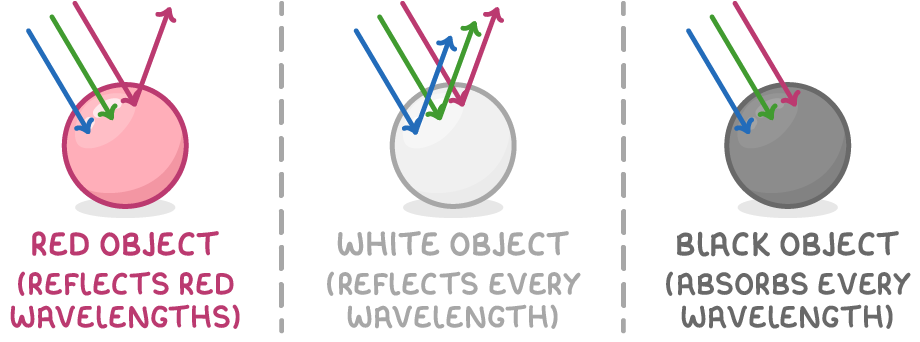
- Opaque objects let no light through. They absorb some wavelengths and reflect others.
- The colour of an opaque object depends on which wavelengths it reflects most strongly.
| Colour of object | Reflects | Absorbs |
|---|---|---|
| Black | none | all wavelengths |
| White | all wavelengths equally | none |
| A primary colour | that colour | all other wavelengths |
| A non-primary colour | that colour, and/or the primary colours that mix to make it | all other wavelengths |
Transparent and translucent objects
- Transparent and translucent objects transmit light - light passes through rather than being absorbed or reflected.
- They appear the colour of the wavelengths they transmit most strongly.
Colour filters
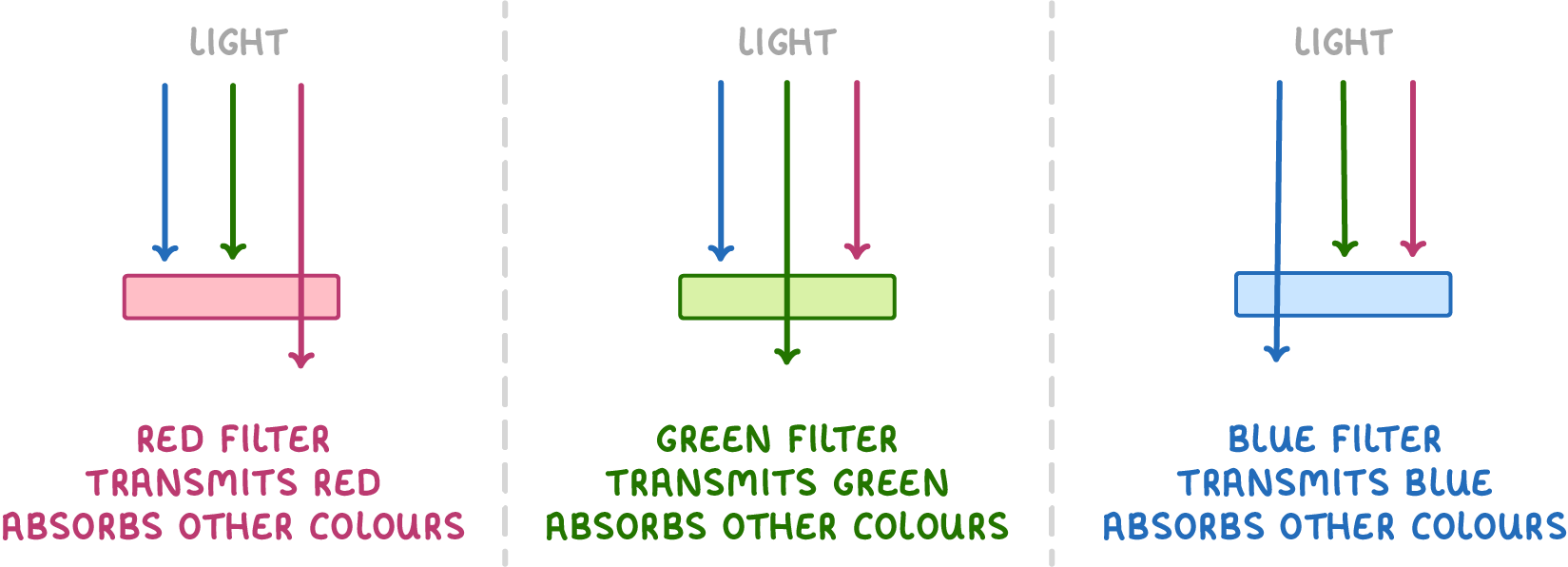
- A colour filter transmits some wavelengths of light and absorbs the rest, so only certain colours pass through.
- A primary colour filter transmits only its own colour. For example, a blue filter transmits only blue light and absorbs the rest.
Viewing objects through a filter
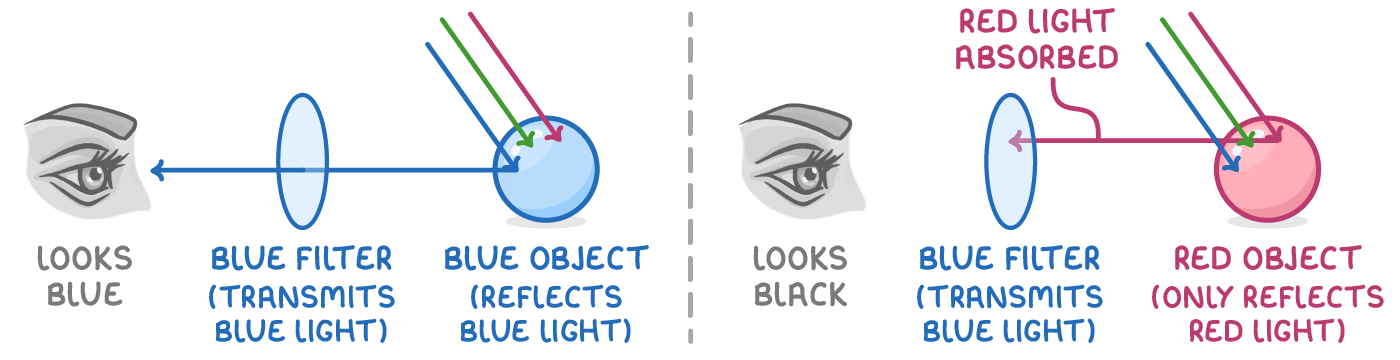
- A blue object seen through a blue filter looks blue - it reflects blue light, which the filter transmits.
- A red object looks black through a blue filter - the red light it reflects is absorbed by the filter, so no light reaches the eye.
Non-primary filters
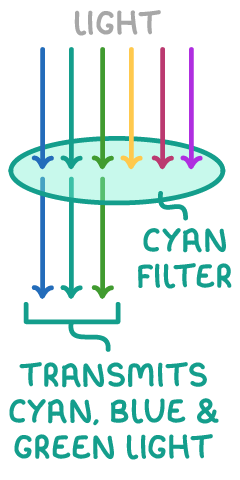
- A filter that is not a primary colour transmits its own colour and the primary colours that mix to make it.
- For example, a cyan filter transmits cyan, blue and green light.
TermDefinition
OpaqueDescribes a material that does not let light pass through it. The light is absorbed or reflected instead.
Colour filterA material that transmits certain wavelengths of light and absorbs the rest.