10.12 - Reuse & Recycling
Why we reduce, reuse and recycle
- Most manufactured goods come from raw materials taken from the Earth, which are in limited supply (finite), such as metal ores.
- Extracting raw materials is damaging and expensive:
- Uses large amounts of energy to extract and process them, mostly from burning fossil fuels.
- Damages the environment through quarrying and mining, which scar the landscape, destroy habitats, and produce waste.
Three ways to conserve raw materials
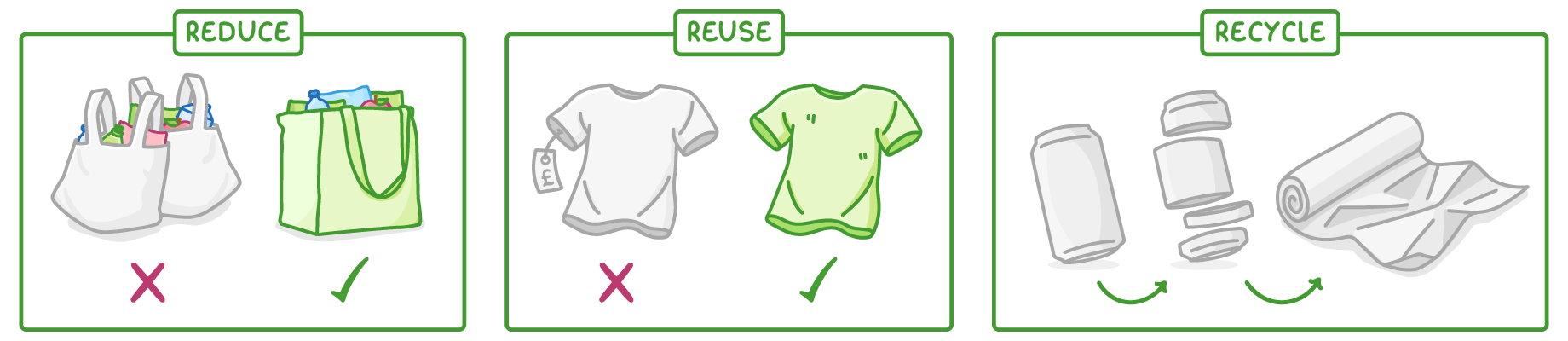
- Reducing - Using less of a material in the first place, saving raw resources, energy, and environmental damage.
- Reusing - Using a product again in its current form, requiring far less energy than recycling because it isn't broken down or reprocessed.
- Recycling - Breaking down a used product into its raw material to make something new.
All three approaches conserve finite resources, save energy, and reduce waste sent to landfill.
The economic case
- Processes that use less energy cost less to run, especially for materials that are expensive to extract.
- Recycling is an industry that creates jobs in collecting, sorting, and reprocessing waste.
- Recycling isn't always worth doing: the cost of collecting and reprocessing must be weighed against the cost of making the material from scratch.
The problem with plastic waste
- Addition polymers are chemically unreactive and cannot be broken down by microbes; they are non-biodegradable.
- Because they don't rot, discarded plastics persist in the environment for centuries.
Three main problems
- Landfill - Large volumes of plastic are buried because mixed plastics are difficult and expensive to separate. They occupy valuable space indefinitely.
- Accumulation in oceans - Plastic litter washed into rivers and seas accumulates, harming marine ecosystems and wildlife.
- Toxic gases from burning - Burning plastics releases useful energy, but it can produce toxic and polluting gases unless carefully controlled.
TermDefinition
Reducing (waste)Using less of a material in the first place.
ReusingUsing a product again in its current form without breaking it down.
RecyclingBreaking down a used product into its raw materials to make something new.
Non-biodegradableNot able to be broken down by microorganisms in the environment.